Real estate call script: what to say from the first second to the booked viewing
A successful real estate call has one goal: a booked viewing or a specific next step, not selling the unit over the phone. Open with a short introduction and the reason for calling, ask five qualifying questions (purpose, area, budget, timing and who decides), suggest only two or three units, and close with a specific appointment. This guide gives you the words for each part, answers to common objections, and how to log the call so the follow-up isn't lost.
Last updated:
Before you dial: 30 seconds of preparation
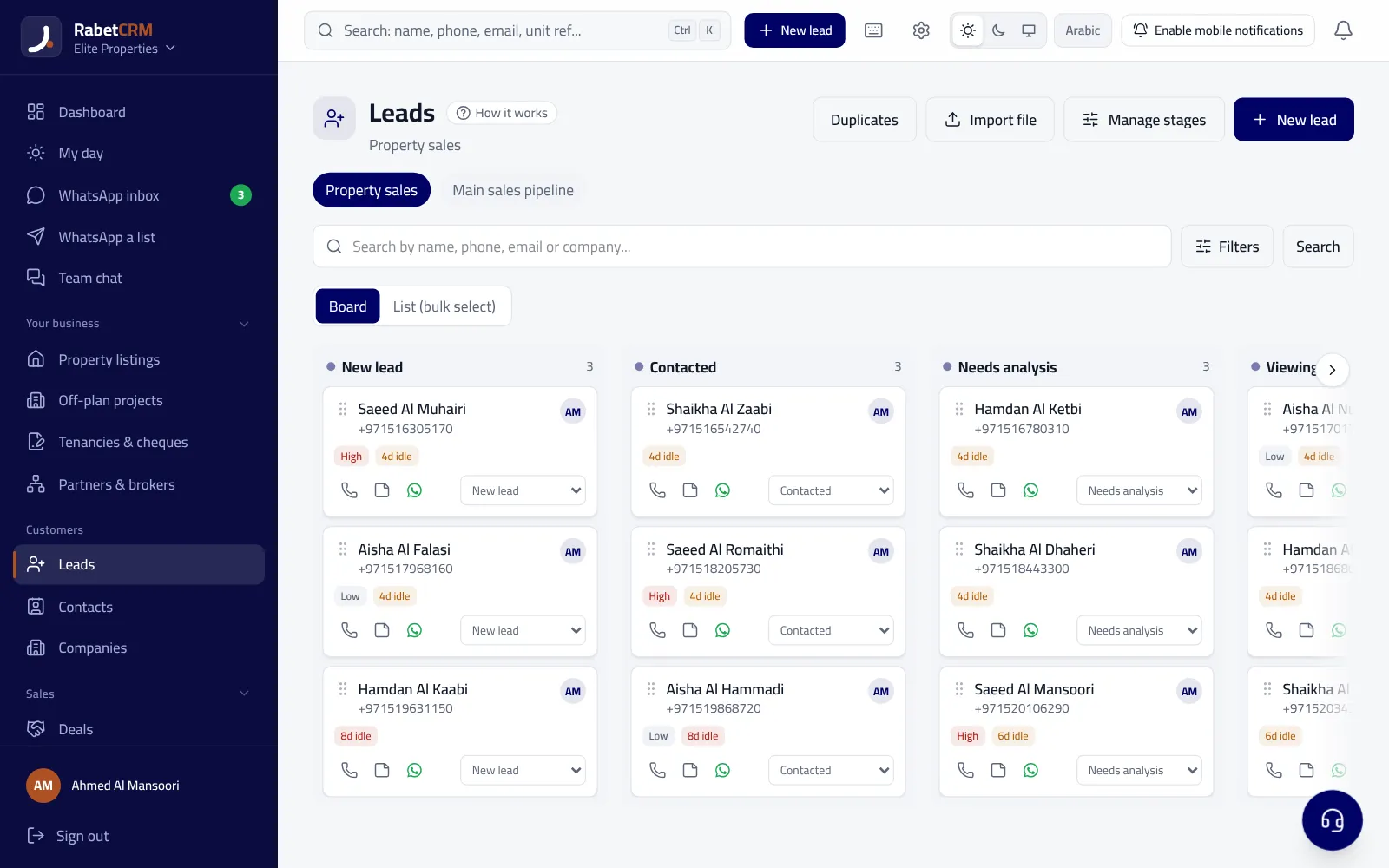
Open the lead's record before calling: which ad or portal did they come from? Which unit did they ask about? Have they contacted the agency before? A lead you ask “which apartment did you enquire about?” after they wrote it in the form feels you didn't care. And if they registered before with another agent, know it before two of you call.
And call fast. A lead who enquired five minutes ago still remembers the ad; a day later they've probably forgotten it or spoken to another agency.
The opening: who you are and why you're calling
Keep the first ten seconds short and clear, and mention something the lead did themselves:
“Hello [name], this is [your name] from [agency]. We just received your enquiry about the two-bedroom in [area]. Is now a good time for two minutes?”
If they say it's not a good time, don't push on. Ask “When would suit you for me to call?”, record the time immediately, then send a short WhatsApp with your name and the unit link.
Five questions to qualify the lead
Ask, don't sell yet. The aim is to understand what they really need:
- Purpose: “Are you looking to live in it or as an investment?”
- Area: “Is [area] the only option, or would you consider nearby areas?”
- Budget and payment: “What budget are you comfortable with? Cash or mortgage?” For rentals: “How many cheques do you prefer?”
- Timing: “When do you need to move or buy?”
- Decision: “Is anyone else involved in the decision?”
Suggest a few, not many
After the questions, summarise what you heard in one sentence so the lead knows you understood: “So you're looking for a two-bed to live in, in the Marina or JBR, up to [budget], moving within two months.” Then suggest only two or three units that match. Ten units confuse a client rather than help them.
If the unit they asked about doesn't fit their needs, say so openly and suggest an alternative. That builds more trust than pushing a unit that doesn't suit them.
The close: a specific appointment
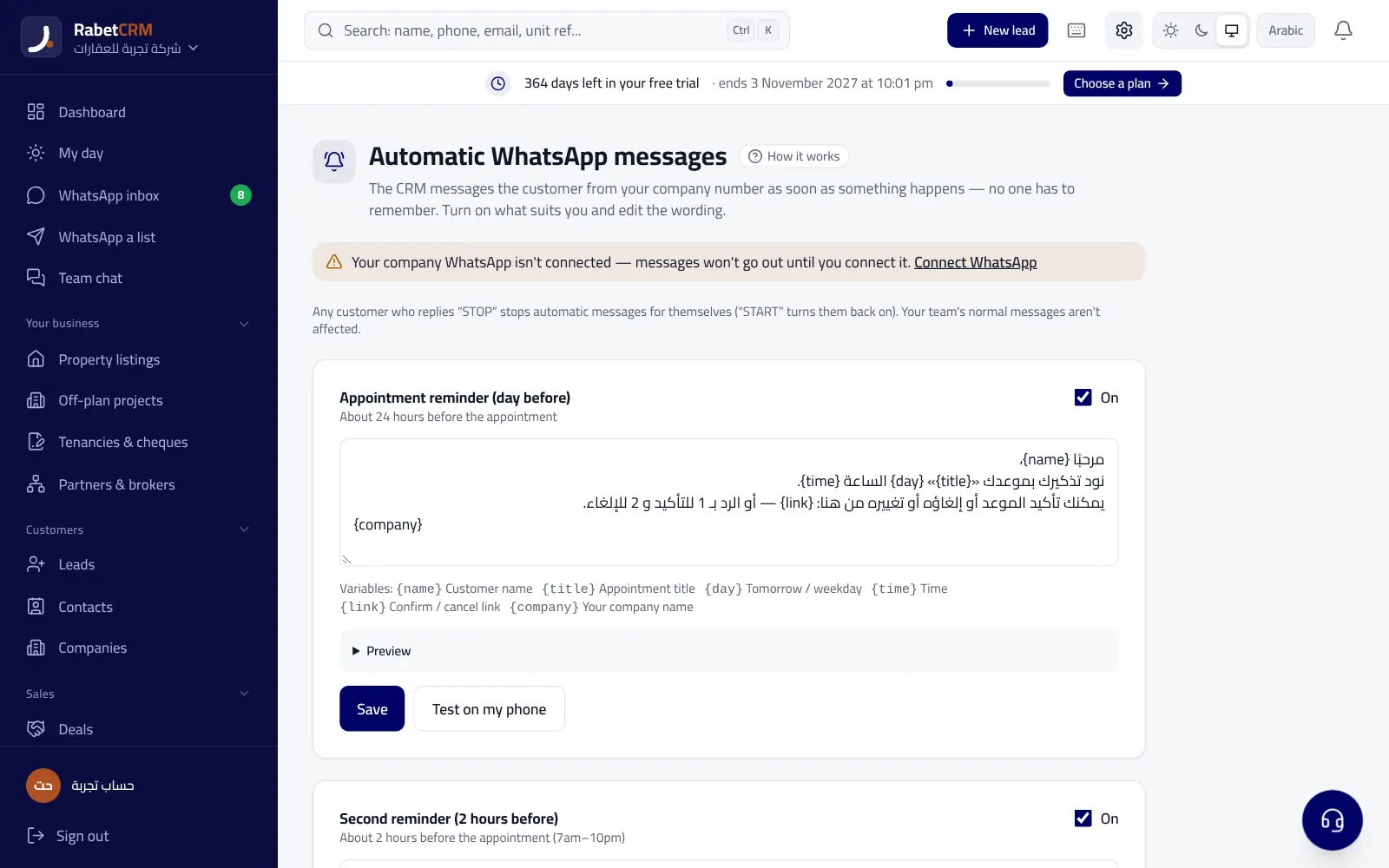
Don't end with “I'll send it over and wait for your reply.” Offer two specific times: “Would Thursday at five or Saturday morning suit you for a viewing?” Choosing between two is easier than an open question. Once agreed, send a confirmation with the address, time and unit links, and log the appointment so the client gets a reminder before it.
The follow-up call after a viewing
Most deals are decided in the call after the viewing, not during it. Call the same day or the next morning, and open with a question: “What did you think of the unit? What did you like and what didn't you?” Listen carefully — the answer tells you whether this is the right unit or you need an alternative.
If they liked it, ask about the next step directly: “Shall we discuss an offer with the owner?” If not, ask for the main reason and suggest a unit that addresses exactly that. If they need time, set the next call before you hang up and log it immediately so the reminder reaches you on time.
Answering common objections
An objection is usually a question that needs an answer, not a final no:
| Objection | Suggested reply |
|---|---|
| “The price is high” | “I understand. What figure would you be comfortable with? I have a similar unit in [nearby area] closer to your budget.” |
| “Just send details on WhatsApp” | “Of course, I'll send them now. So they don't get lost, shall we speak tomorrow at [time] after you've looked?” |
| “I'm still looking” | “Great, that's the best time for us to help. What haven't you found yet in the units you've seen?” |
| “I'm working with another agent” | “No problem. If you don't find what you want, I can send you what we get exclusively. Shall I add you?” |
| “In two months” | “Great, I'll call you on [date]. Would you like me to send new options in the same area until then?” |
After the call: one minute of logging saves the deal
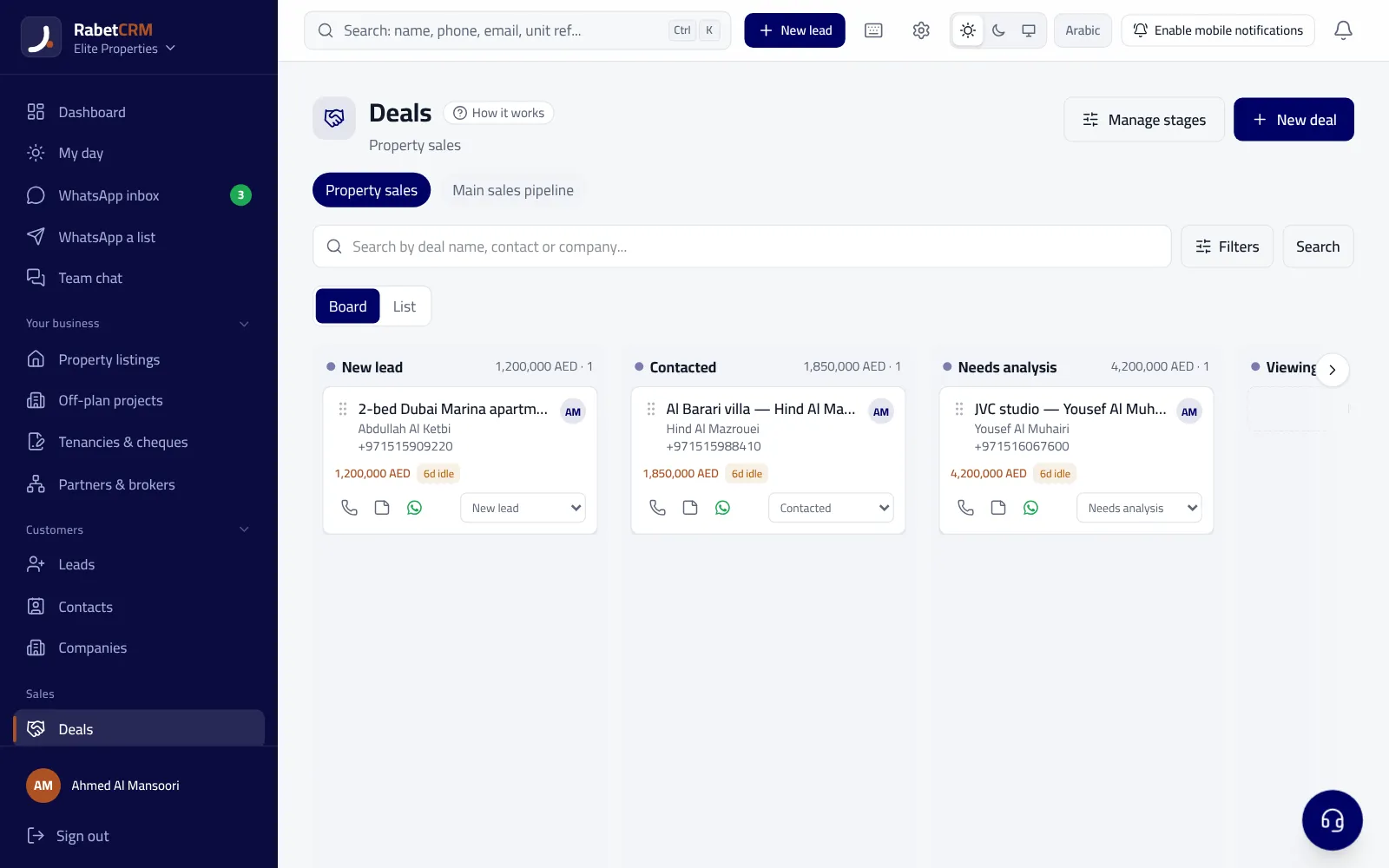
Log it immediately on the lead: the requirement (purpose, area, budget, timing), the call outcome, and the next step with its date. A client who said “in two months” needs a reminder that reaches you in two months, not a note on your desk. And once the requirement is recorded, a real estate CRM suggests matching units automatically whenever a new one is added.
And the sales manager can see who called their new leads and when, and who was slow, in the response-time report, so they know where to coach the team.
Mistakes that lose the call
- Talking more than listening: the client should speak most of the first call.
- Sending ten units without asking anything.
- Ending without a dated next step.
- Promises you can't keep (a guaranteed price or yield).
- Calling again at bad times after the client asked for another time.
- Forgetting to log the call, so another agent calls the same lead and asks the same questions again without knowing what was said.
More articles
Real estate CRM in every emirate
Compare RabetCRM
FAQ
How long should the first call take?
Usually three to seven minutes — enough to qualify and book a next step.
Should I call or WhatsApp first?
Many agencies send an instant WhatsApp welcome and then call within minutes; what matters is the lead doesn't wait.
How many times should I try if they don't answer?
Several attempts at different times over the first days, with a WhatsApp after each, then slower follow-up.
Should I use the same script with every lead?
Use the same structure and adapt the words; an investor differs from a tenant.
How do I know my team calls fast?
A CRM response-time report shows each agent's time to first contact.