Speed to lead in real estate: turning minutes into viewings and deals
Speed to lead is the time between a client's enquiry arriving and the first real contact, and it's one of the strongest conversion factors a brokerage controls. Clients in Dubai usually ask several brokers about several units at the same time, and whoever replies first with useful information often books the viewing. The fix isn't just asking the team to be faster; it's building a system: the lead lands automatically, is routed to an available agent who gets an alert, and if there's no response within a set time it moves to another agent and the manager is notified.
Last updated:
Why minutes matter
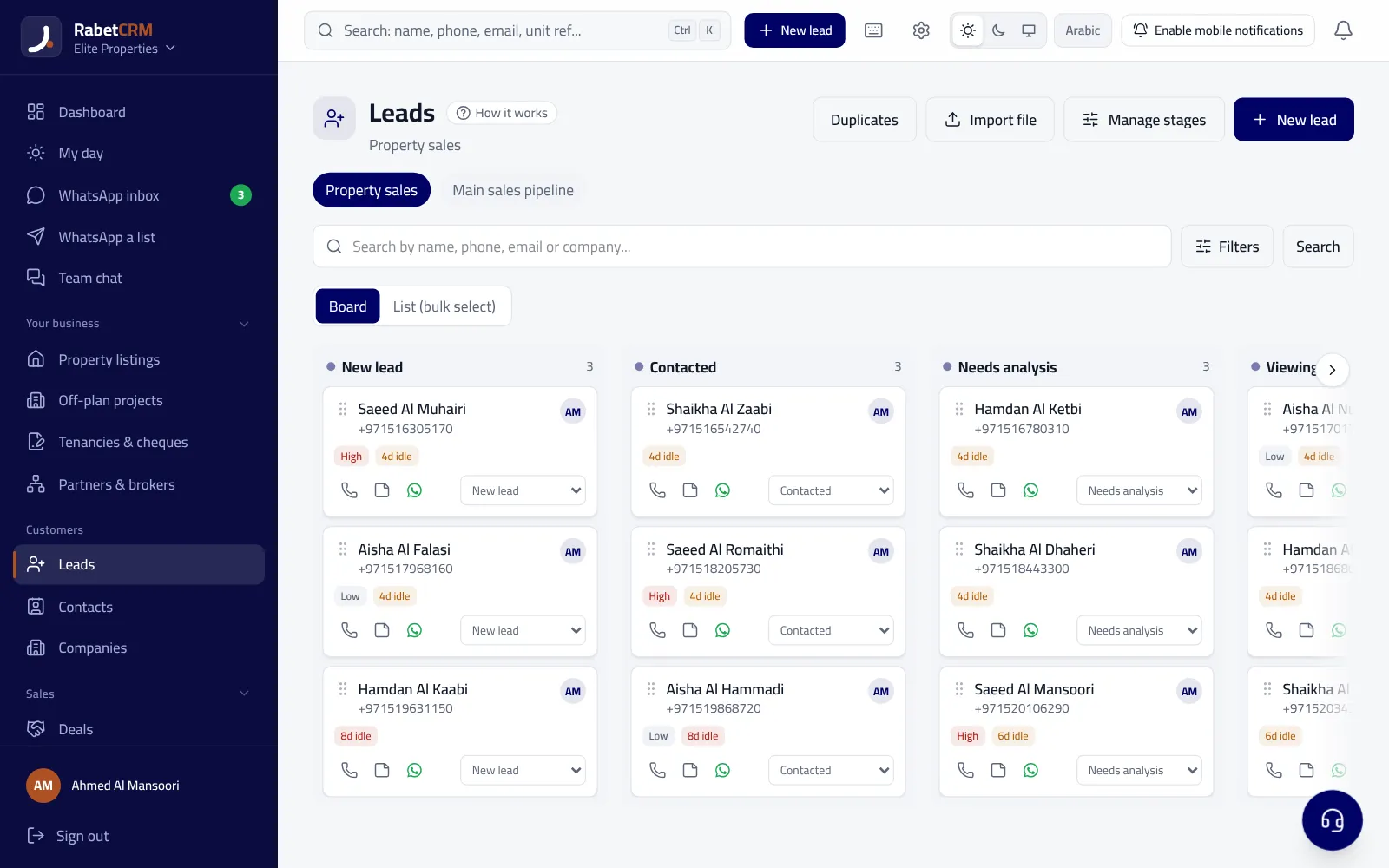
A property enquiry has a short life. A client who tapped the WhatsApp button on a Dubai Marina listing is still browsing the portal and messaging three or four other brokers. Whoever replies within minutes finds an engaged client; whoever replies hours later finds someone who has received offers and booked a viewing elsewhere, or has forgotten which listing they asked about.
This isn't just a feeling. A 2011 Harvard Business Review study of thousands of US companies found that firms contacting leads within an hour were nearly seven times more likely to qualify them than those contacting later, and that many companies took a day or more. Markets and channels have changed since then, but the principle holds: the shorter the gap, the better your chances.
How to measure first-response time
You can't improve what you don't measure. Before changing anything, track your current first-response time for two weeks: the gap between the lead arriving and the first logged call or WhatsApp message. You'll often find the average hides a problem: morning leads get fast replies, while evening and weekend leads wait until the next morning.
| Metric | How it's calculated | Why it matters |
|---|---|---|
| Average first-response time | Average gap between arrival and first contact | The team's overall picture |
| Share answered within 5 minutes | Leads answered within 5 minutes ÷ total | A clear goal the team understands |
| Unanswered leads | Leads with no logged contact after 24 hours | Directly wasted money |
| After-hours response | Same metrics for evening and weekend leads | Usually the biggest gap |
Build a system that doesn't rely on memory
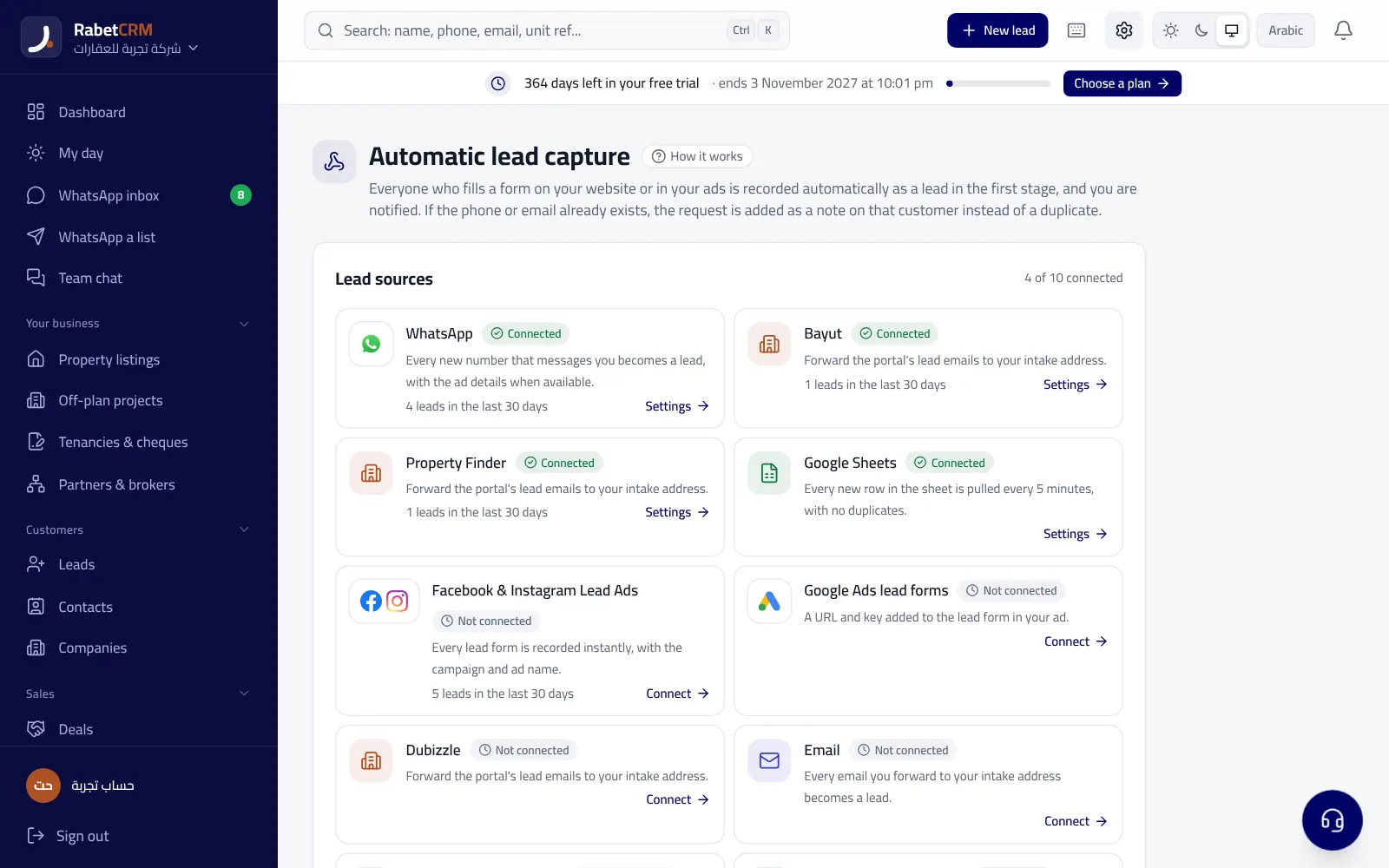
Step one: every lead enters the system automatically from its source, instead of someone copying it from a portal email or Ads Manager. Step two is routing: round-robin across available agents, or by area, project or language. Step three is an instant mobile alert. Step four matters most: a reassignment rule, so that if the agent logs no contact within a time you set, the lead moves to another agent and the manager is alerted.
- Automatic capture from portals, Meta ads and your website form
- Round-robin, area-based or project-based routing
- Instant alert on the agent's phone
- Auto-reassignment after a no-response window + manager alert
- A ready first WhatsApp message template per source
What to say in the first contact
Speed alone isn't enough if the first message is generic. The best first reply names the unit or project the client asked about, answers one useful question (final price, availability, a viewing slot), then asks one qualifying question: buying to live or to invest? What budget? When do they want to move? If they don't answer the call, send a short WhatsApp message and log a follow-up task with a set date.
Keep ready templates per source and language, because a Bayut client differs from a Facebook ad client. A good template saves a minute on every reply, which adds up across a hundred leads a month. Have agents edit at least one line so the reply feels personal.
Each source behaves differently
Portal leads from Bayut, Property Finder and Dubizzle usually come with a question about a specific unit, so the client expects an answer about that unit: is it still available? What's the final price? When can they view it? Facebook and Instagram ad leads are usually less defined: the client is interested in a project or area and needs more qualifying questions before you send units. Leads from your own website or project page typically carry the highest intent, because the client looked you up.
So make routing rules and templates differ by source. A portal lead goes to the agent who owns that listing where possible, because they know the unit. An ad lead goes round-robin to the project team. A website lead may deserve higher priority and a manager alert. And record the source on every client from the first moment, so you later know which channel brings actual deals, not just enquiries.
Mistakes that slow the team without anyone noticing
Most delay doesn't come from lazy agents but from small steps along the way. Review this list with your team; you'll usually find two or three of them happening today.
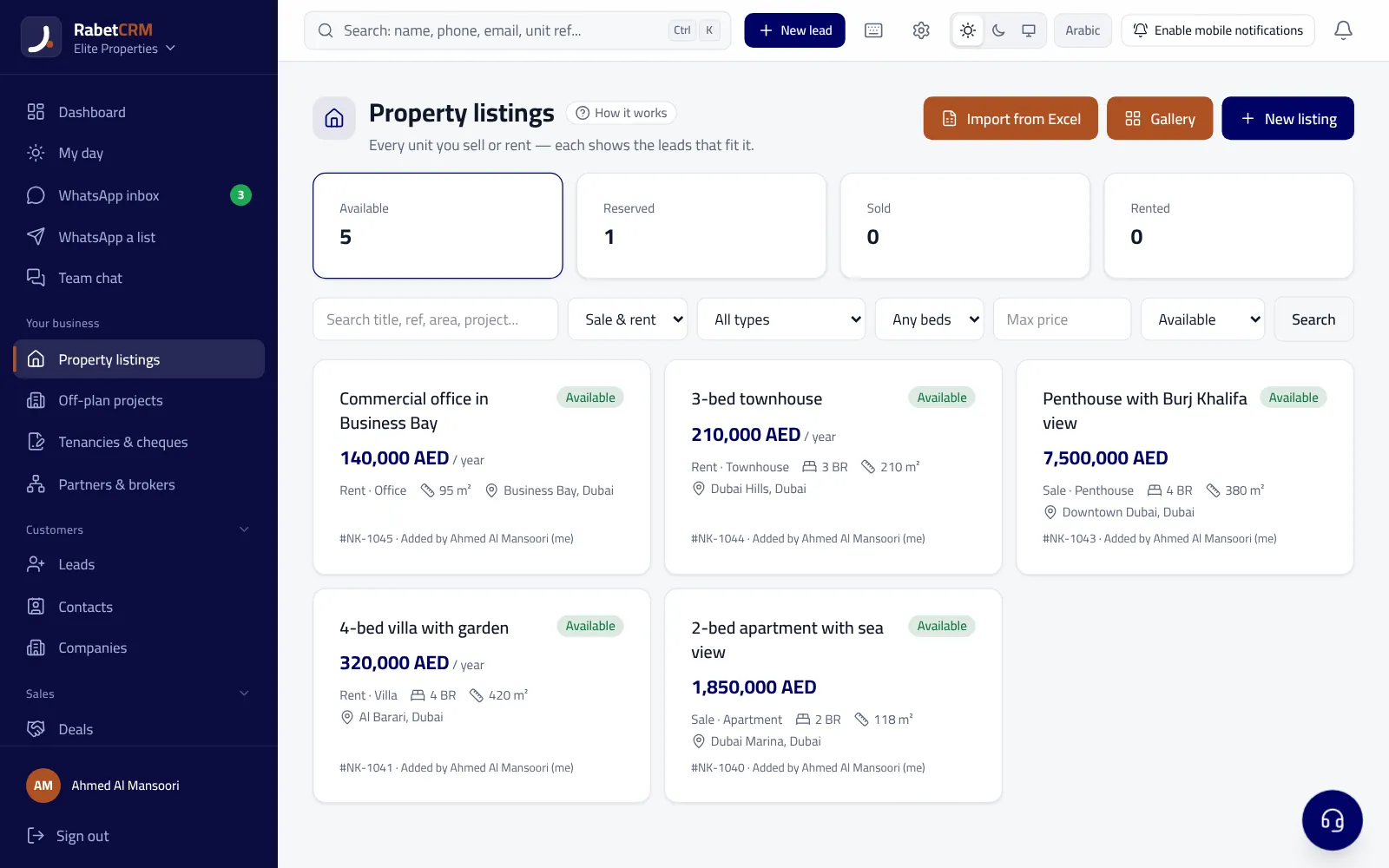
- Portal emails land in a shared inbox nobody checks regularly
- Leads are posted in a WhatsApp group waiting to be claimed
- The agent is at a viewing and nobody covers
- No clear rule for who takes evening leads
- The first call isn't logged, so the manager can't see it happened
After-hours leads
A large share of property enquiries arrive in the evening and on weekends, because that's when people browse. You have three practical options: a rotating on-call agent for evenings and days off, an automatic WhatsApp reply confirming receipt and giving a call time, or a mix of both. What matters is that no client waits without any reply until the next morning, and that the lead is seen first thing.
The manager's role: one weekly report
You don't need long meetings. One weekly report is enough: first-response time per agent, how many leads were reassigned away from them, and viewings booked. Share the numbers transparently, reward the fastest, and ask about causes of delay instead of blaming. In RabetCRM, a response-time report shows each salesperson's speed, and automatic distribution and reassignment rules are ready to configure, alongside the team WhatsApp inbox.
More articles
Real estate CRM in every emirate
Compare RabetCRM
FAQ
What's the ideal response time?
The faster the better. Set a realistic, measurable goal — such as answering most leads within five minutes during working hours — then improve it.
Is an automatic reply enough?
An automatic reply confirms receipt and stops the client feeling ignored, but it doesn't replace real contact from an agent soon after.
How do I distribute leads fairly?
Round-robin across available agents is simplest; you can add rules by area, language or project, with auto-reassignment on delays.
What about old leads nobody answered?
Run a follow-up campaign with a polite WhatsApp message offering similar new units, and log the outcome. Some of them re-engage.
Can WhatsApp response time be measured?
Yes — if WhatsApp conversations are logged on the client in the system, you can measure the gap between their first message and the team's first reply.