A CRM for clinics in Egypt: organising Facebook and WhatsApp bookings, reminding patients of appointments and tracking sessions to reduce no-shows
Most bookings at clinics and aesthetic and dental centres in Egypt start with a message on the Facebook page, WhatsApp or a phone call, then get written in a notebook or sheet at the front desk. A clinic CRM collects these requests in one place, turns them into appointments, sends the patient a WhatsApp reminder before the visit and tracks multi-session treatment plans, so the front desk knows every day who is due and who is overdue, no-shows drop and patients don't stop halfway through a plan.
Last updated:
How do bookings reach a clinic in Egypt?
Clinics in Egypt today, especially in aesthetics, dentistry, dermatology, physiotherapy and nutrition, rely heavily on their Facebook and Instagram pages and ads. A patient sees an ad for laser or braces and sends “how much?” on the page or WhatsApp, often asking several centres the same day. The clinic that replies first with a clear answer and a suggested time usually gets the booking.
The problem is that these requests are scattered across page messages, the reception phone and missed calls, and then the appointment is written in a notebook or sheet. When the receptionist changes or the day gets busy, a request is lost, a reminder is forgotten, or nobody calls the patient who didn't come. This is where a customer relationship management (CRM) system comes in: one place for every patient, their source, appointments and sessions. If you're comparing options in the Egyptian market generally, read the guide to the best CRM in Egypt.
From message to appointment: leave no request unanswered
The first step is for every request to enter the system automatically: from Facebook and Instagram lead ads, the booking form on the clinic's website and WhatsApp. In RabetCRM the clinic's WhatsApp number becomes a shared inbox inside the system, and every new number that messages you becomes a prospective patient file, so the front desk and manager see the same requests and the chat isn't lost if staff change.
Then save repeated replies as ready templates: a general answer to the price question with an invitation to a consultation, working hours, the address and location pin, and what the patient should bring. When the appointment is booked, it's recorded on the patient's file and assigned to a specific staff member for follow-up, so the manager knows how many requests from each source became real consultations.
- Connect Facebook and Instagram ads and the website form to the system
- Make the clinic's WhatsApp a shared inbox, not one employee's phone
- Save repeated replies as ready templates
- Record each patient's source to know which ad brings real bookings
Appointment reminders: the simplest way to cut no-shows
Many no-shows come from forgetting or an emergency the patient didn't report, not from rejecting treatment. A WhatsApp reminder the day before, asking for explicit confirmation, gives you a chance to rebook the slot for another patient if the original one cancels. A short reminder on the morning of the appointment helps those who booked weeks ahead.
On the same day, someone should call anyone who didn't show to reschedule, rather than waiting for them to return on their own. In RabetCRM reminders go out in one tap on WhatsApp from today's appointment list, and a follow-up task is created for no-shows so they aren't forgotten. For more on the steps to reduce no-shows, read the guide to patient follow-up and reducing no-shows.
| Timing | Message | Goal |
|---|---|---|
| At booking | Confirm the time, address and location pin | Make sure the patient saves the appointment |
| A day before | Reminder asking to confirm attendance | Free the slot for someone else if they cancel |
| Morning of the appointment | A short reminder of the time | Reduce forgetting |
| After a missed appointment | A message or call to reschedule | Don't lose the patient |
Multi-session plans: laser, braces and physiotherapy
In many specialities the relationship doesn't end with one visit: a laser package of several sessions, monthly braces adjustments, a physiotherapy programme or nutrition sessions. A patient who stops midway doesn't get what they started for, and often doesn't return. Tracking these sessions from a notebook or the receptionist's memory is hard with dozens of patients.
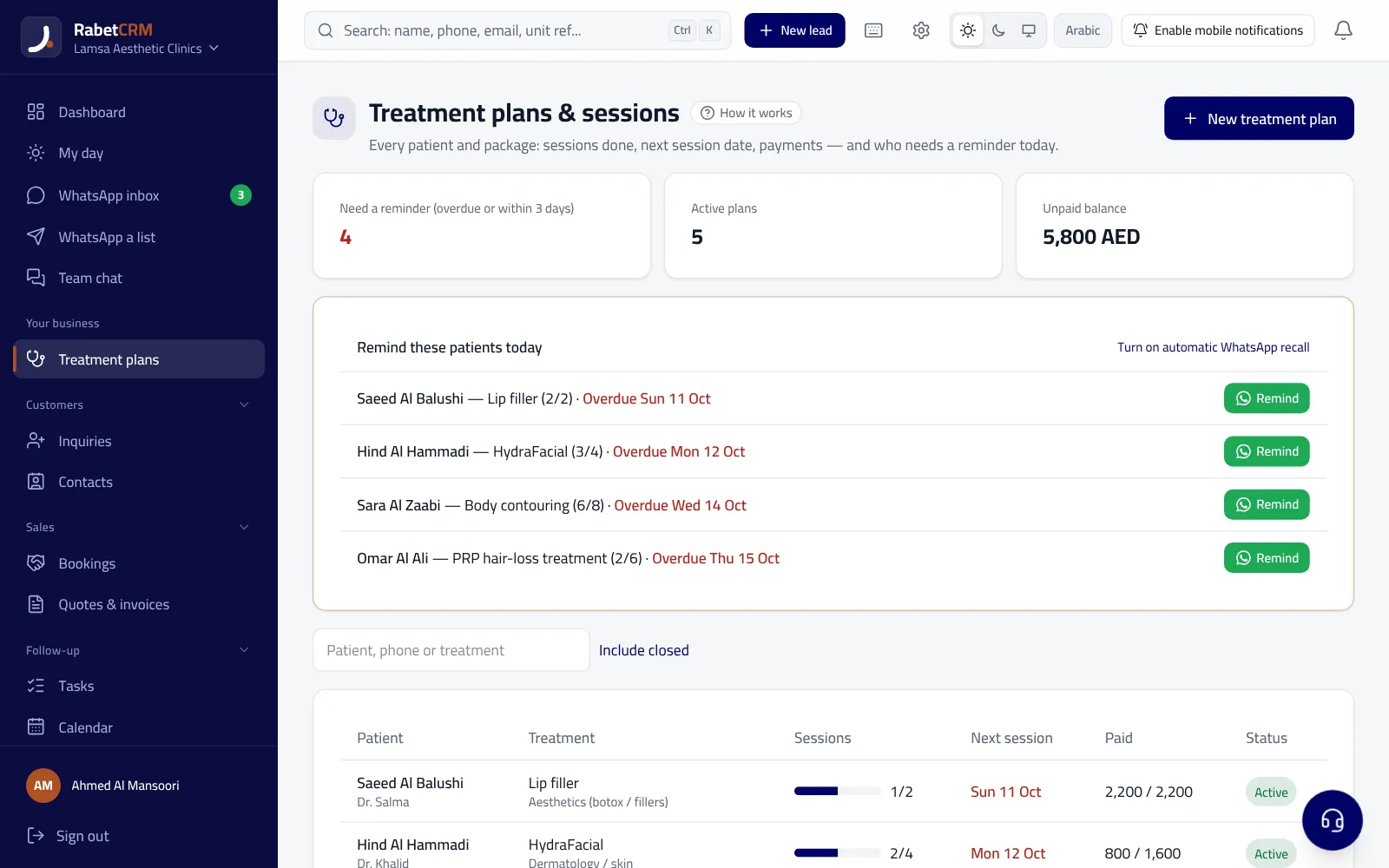
In RabetCRM for clinics every session is logged against the patient's treatment plan, the app calculates the next session date, and a daily list shows patients who are due or overdue so you can send each a WhatsApp reminder in one tap. Payments are recorded against sessions, so the manager knows what's left in each package.
- Record the number of sessions in the plan from the start
- Book the next session before the patient leaves
- Review the overdue list daily and contact them
- Record payments against sessions, not in a separate notebook
Follow-up after the visit and patient recalls
Some patients attend a consultation and then need time to think or to discuss the cost with family. A polite follow-up a few days later, sending the information you promised or proposing a date for the first session, is very different from leaving the decision to chance. The same goes for reminding patients of periodic check-ups the doctor sets, such as dental cleanings or follow-up after a plan ends.
In RabetCRM each request moves through clear stages (inquiry, consultation booked, attended, started plan), and follow-up tasks with set dates are created for each patient, so the manager sees how many patients attended a consultation but haven't started, and who's responsible for following up. Note that follow-up covers appointments and general information; medical decisions stay between doctor and patient inside the clinic.
Patient data privacy in Egypt
A clinic holds patients' names, numbers and appointments, which in Egypt are personal data governed by Personal Data Protection Law No. 151 of 2020, and health data in particular is treated there as sensitive data that deserves extra care. So limit who sees the data to those who really need it, don't send medical details over WhatsApp, and keep messages to the appointment time and address.
RabetCRM isn't an electronic medical records system but a system for bookings, follow-up and communication; the detailed medical record stays in your clinic's approved clinical system. In RabetCRM you set permissions per role so each staff member sees only what they need, with two-step verification and each clinic's data isolated. This is general guidance, not legal advice.
How to get started with RabetCRM in your clinic
Start by importing your current patient list from Excel or Google Sheets, then connect the clinic's WhatsApp number and Facebook ads, and save confirmation and reminder messages as templates. Then add the treatments you offer with their session counts, and add front-desk staff with their permissions. From the first week you'll see a daily list of today's appointments and patients overdue for a session.
RabetCRM works in Arabic and English in the browser on desktop and mobile, with prices in Egyptian pounds. See RabetCRM's Egypt page and pricing, read about WhatsApp CRM, or try it free for 15 days with no card.
More articles
FAQ
What is the best appointment booking software for a clinic in Egypt?
The best fit collects Facebook and WhatsApp requests in one place, sends reminders before appointments, tracks multi-session plans, and works in Arabic with prices in pounds. RabetCRM is built for this, with a 15-day free trial.
How do I reduce patient no-shows?
Send a WhatsApp reminder the day before asking for confirmation, a short reminder on the morning itself, and call anyone who didn't show on the same day to reschedule.
Is RabetCRM an electronic medical record system?
No. It's a system for bookings, follow-up, patient communication and tracking sessions and payments; the detailed medical record stays in the clinic's approved clinical system.
Does it suit aesthetic, laser and dental centres?
Yes, especially multi-session services, because the app logs every session against the treatment plan, calculates the next session date and shows overdue patients daily.
Can a receptionist see only part of the data?
Yes. You set permissions per role in RabetCRM so each staff member sees only what they need, which matters for protecting patient data under Personal Data Protection Law No. 151 of 2020.