Real estate sales in Egypt: the skills that separate closers from the rest
A strong real estate salesperson in Egypt isn't the one who talks the most; it's the one who knows the projects and areas well, replies to leads within minutes, asks questions that reveal exactly what the client wants, gets the client to a site visit, and follows up until they decide. These skills can be learned and don't need years of experience. This article explains each skill with examples, gives a practical plan for your first three months if you're starting out, and shows how a system helps you never forget a client.
Last updated:
1. Know what you sell better than the client
Clients today arrive at a visit having watched videos and read comments about the developer and the compound. If they know more than you, you lose their trust in the first minute. Know every project you sell: the developer and track record, delivery dates, payment plan (down payment, installments and duration), sizes and prices, and how it differs from nearby projects.
And know the areas: distance to main roads, schools, universities and business districts, and what's actually built versus still planned. The New Cairo, Zayed and Capital compounds guide is a good start.
2. Reply within minutes
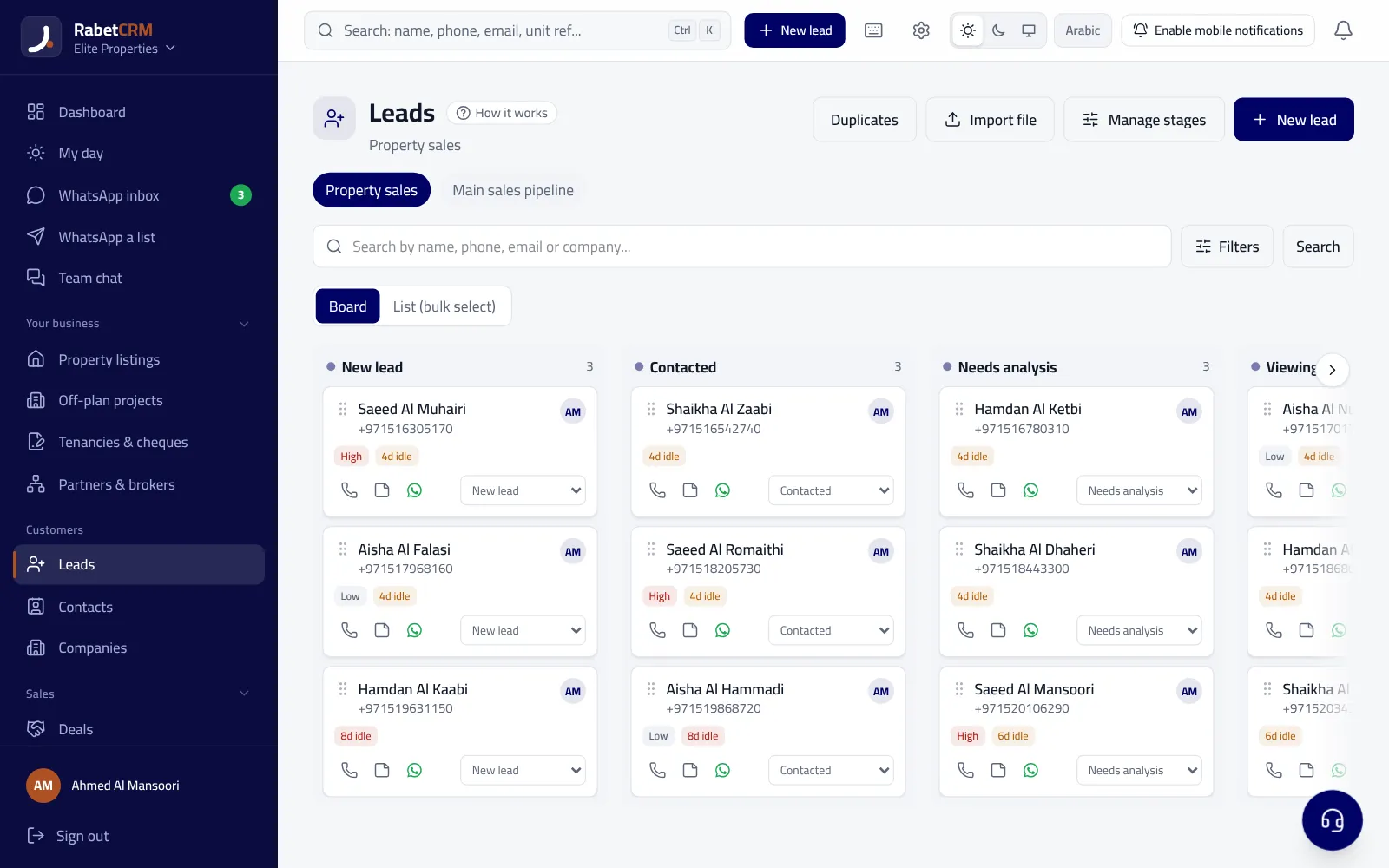
A Facebook lead goes cold very fast because the client left their number with several companies. The salesperson who calls first gets the chance to book the visit. Keep lead notifications on, and if you can't call, send a short WhatsApp with your name, the company and when you'll call. In companies with automatic routing, a lead you don't answer within the set time moves to a colleague — so speed is now part of the job itself.
3. The right questions before you pitch
The biggest mistake is sending ten projects to a client whose needs you don't know. Ask first, and listen more than you talk:
- “Are you looking to live in it or to invest?”
- “Which area is close to your work or the kids' schools?”
- “What down payment and monthly or quarterly installment are you comfortable with?”
- “When do you need delivery?”
- “Is anyone else part of the decision?”
- “Have you looked at other projects? What did you like and dislike?” — this answer saves you half the work, because it tells you what they're comparing against.
4. The site visit is half the deal
Clients rarely buy without seeing the site, the unit or the show apartment. The goal of the first call is a visit with a date, not a sale over the phone. Offer two specific times instead of “when would you like to come?”, send a confirmation with the address and location pin, and remind the client the day before. At the visit itself: arrive before the client and show what matters to them (the nearby school, the size, the view), not everything.
5. Negotiating without burning the price
When a client says “it's expensive,” don't drop the price immediately. Ask first: expensive compared to what? Sometimes the problem is the down payment, not the price, and the answer is a different payment plan or a smaller unit in the same project. Know your limits from your manager before the visit: what discount or flexibility you can offer and what needs approval. And never promise something that isn't in your hands.
6. Follow-up: where deals actually close
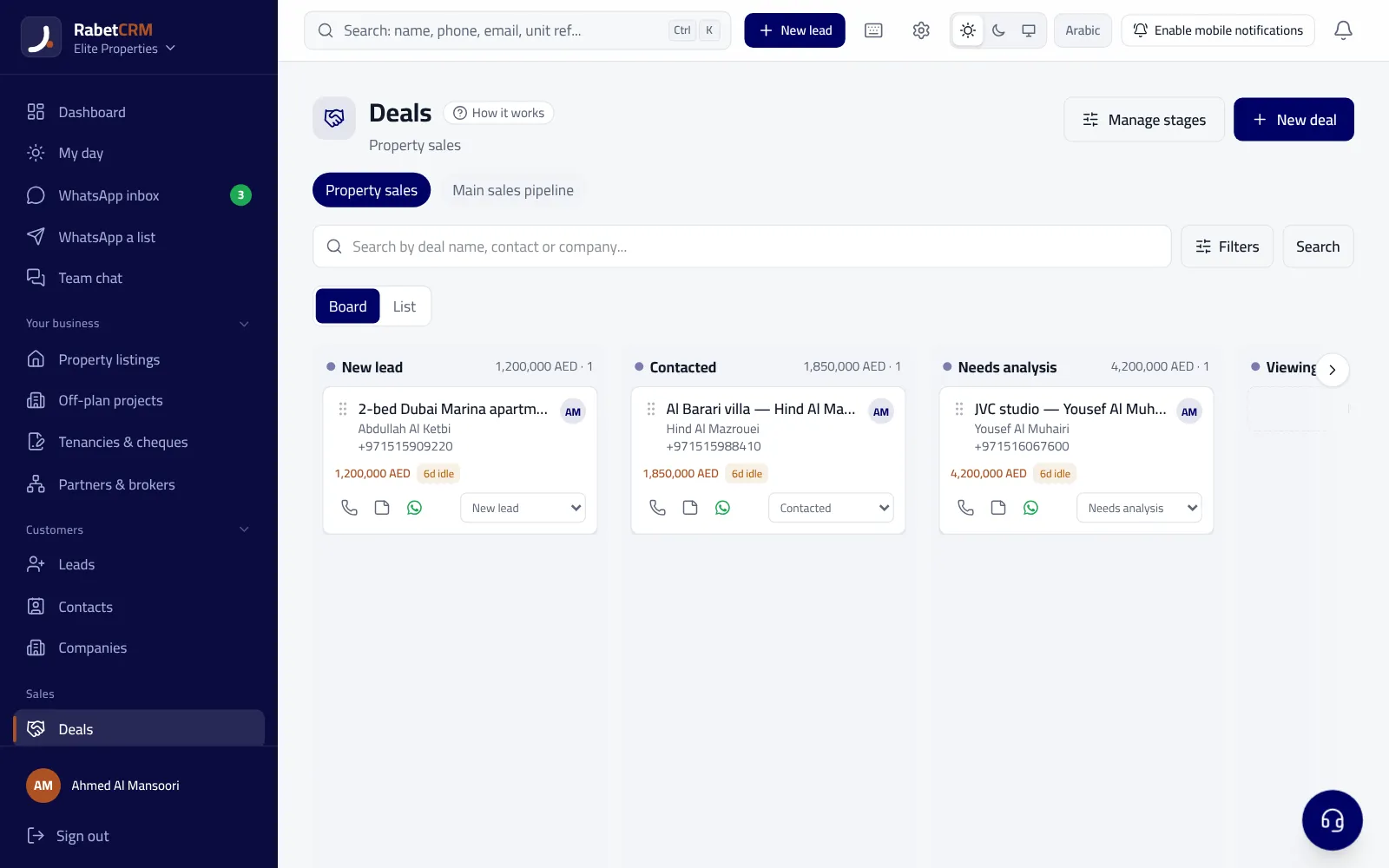
Many clients say “I'll think and get back to you,” and most deals are lost here because the salesperson forgot or called too late. After every call record what the client wants, where you are, and the next step with a date. A client who said “after the holiday” must actually be called after the holiday. Follow-up message examples are in WhatsApp messages for real estate companies.
7. Trust matters more than smooth talk
A client buying an apartment is committing years of money, so they look for someone they trust before they look for the lowest price. Tell the truth even if it costs you this deal: if delivery might slip, say so; if the unit doesn't fit their needs, suggest another. A client who felt you were honest comes back for the next deal and recommends you to others.
And don't promise numbers you're not sure of, like “the price will double” or “guaranteed return.” Say what you know; for what you don't, say you'll check and get back — and actually do.
A 90-day plan for a new salesperson
If you're new to real estate sales:
| Period | Focus on |
|---|---|
| Month 1 | Learn your company's projects and areas, visit every site yourself, and listen to strong colleagues' calls. |
| Month 2 | Focus on reply speed, questions and booking visits, and log every call with its next step. |
| Month 3 | Review your numbers: leads answered, visits, deals, and where you lose clients, then work on the weakest stage. |
Know your numbers
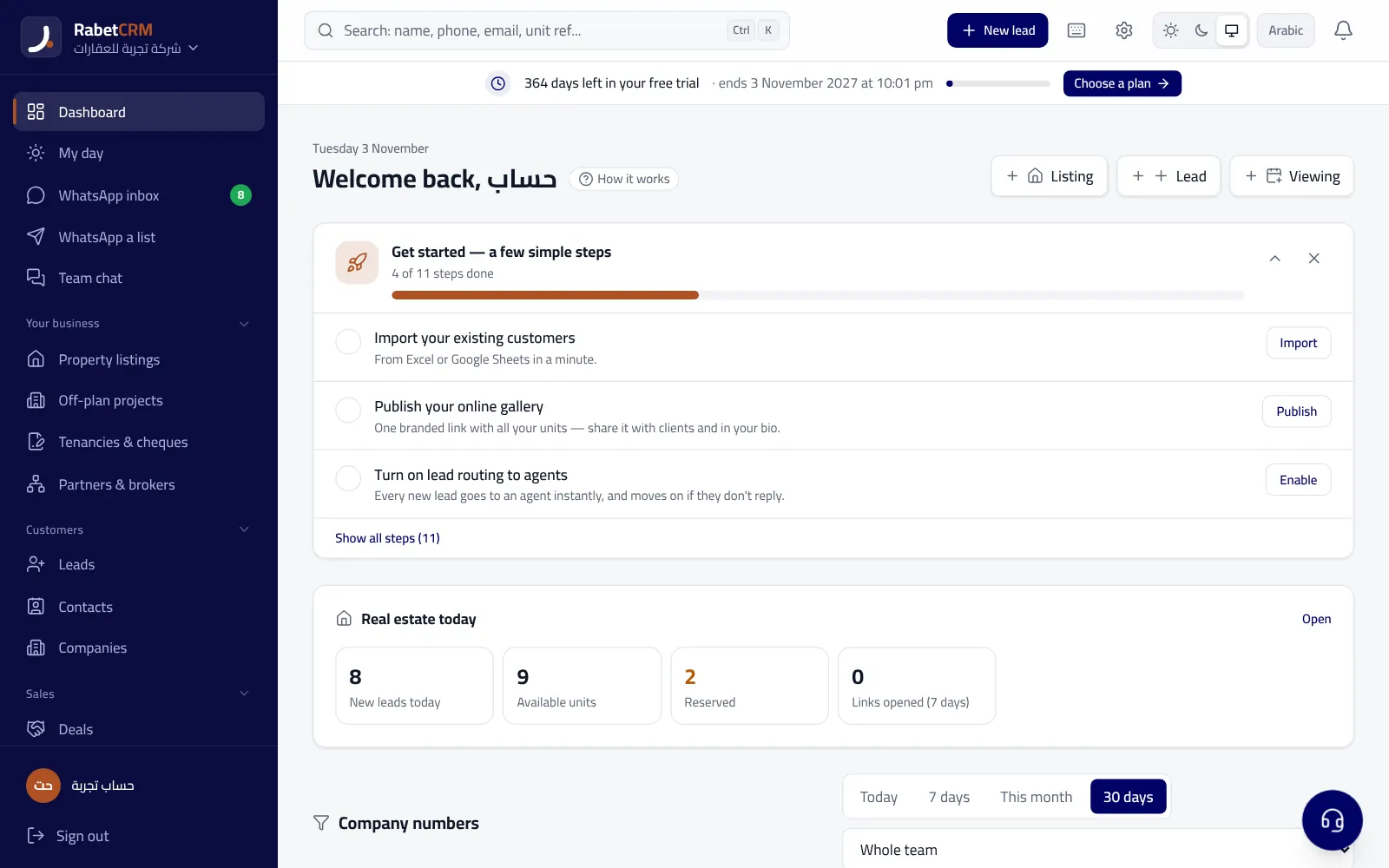
A strong salesperson knows their numbers: average reply time, the share of leads that reached a visit, and the share of visits that closed. These tell you exactly what to improve. Many visits but few deals means the problem is the visit or negotiation; many leads but few visits means it's the first call. Sales managers see these numbers for the whole team in sales targets and reports.
Tools that make it easier
A phone and a sheet aren't enough once you have dozens of leads a week. A system does what gets forgotten: new leads reach you with a notification, a “Today” list tells you whom to call, a reminder reaches the client before the visit, and a unit link tells you when the client opens it. That leaves your time for what only you can do: talking to the client. See the real estate sales system.
More articles
Real estate CRM across Egypt
FAQ
Do I need experience to work in real estate sales?
No, many companies hire beginners and train them. What matters is learning projects quickly and staying disciplined on follow-up.
What is the most important real estate sales skill?
Organised follow-up together with fast replies; most deals are lost to late follow-up.
What if the client doesn't answer?
Try at different times, send a WhatsApp after each attempt, then follow up at longer intervals.
How is real estate sales commission calculated?
It varies by company: a percentage of the deal value or of the company's commission from the developer. Ask about the scheme before you start.
Where can I learn?
By visiting projects yourself, listening to colleagues' calls, and reviewing your numbers monthly.