Managing property for landlords in Dubai: a practical agency guide from the management contract to the owner report
Property management for Dubai landlords means the agency runs the unit end to end on the owner's behalf: leasing and Ejari registration, rent collection and post-dated cheque tracking, maintenance, renewals, and a clear periodic report to the owner. It requires a real estate licence covering leasing and property management for third parties, registration with RERA, and a written management contract setting out authority and fees. The agencies that succeed are the ones whose landlords can see everything without having to ask.
Last updated:
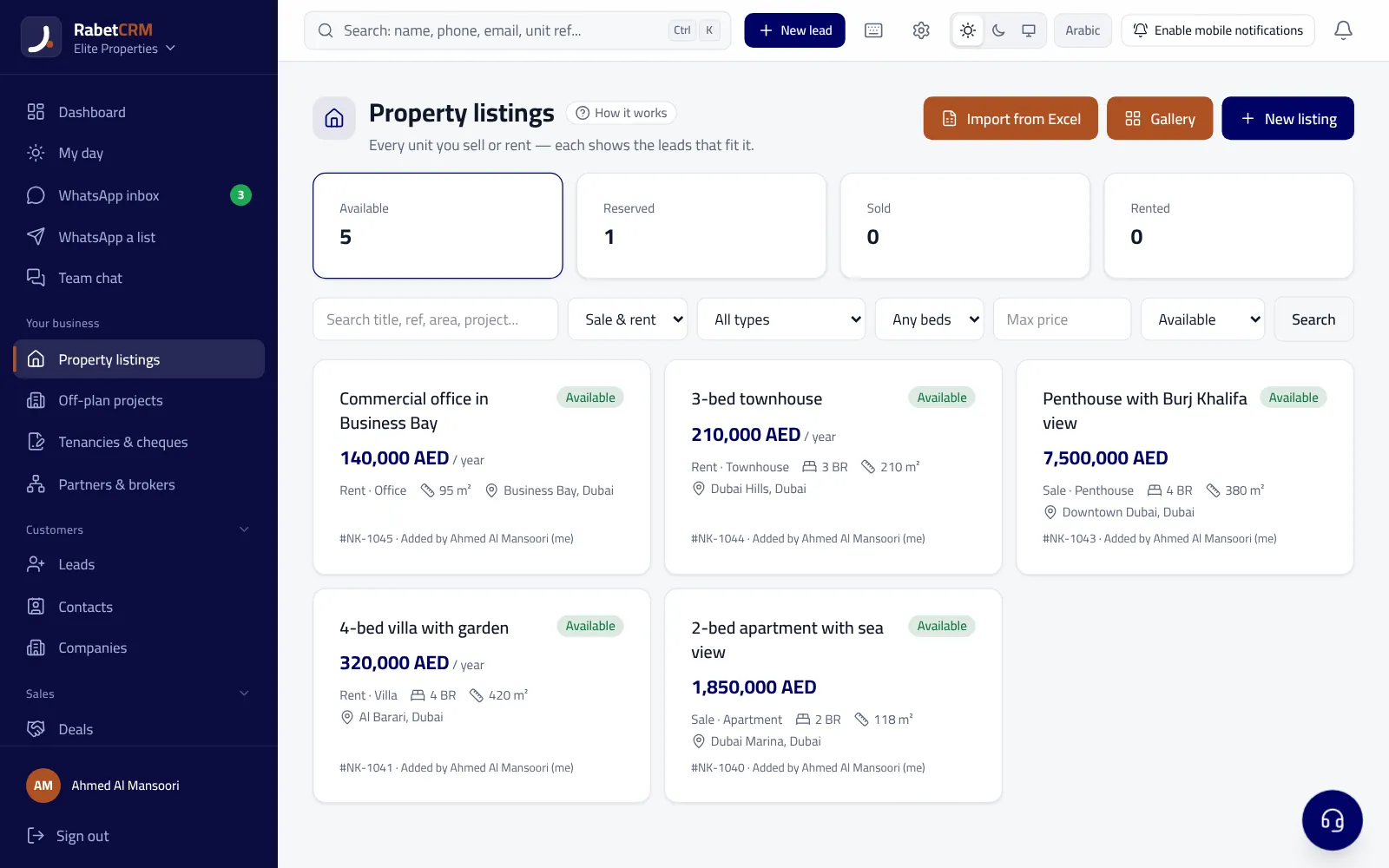
What does a property manager do for a landlord?
Many Dubai landlords are investors living abroad or people without the time to run their units. They want an agency that handles everything: finding and screening tenants, drafting and registering the lease, collecting rent, dealing with maintenance requests and complaints, and renewing or re-letting when a tenant leaves. In return the landlord pays a recurring fee — steadier income for the agency than volatile sales commissions.
But the service runs on trust. A landlord who doesn't know whether this month's rent was paid, or why money was spent on maintenance, starts to doubt and eventually moves their units to another agency. So property management quality comes down to two things: disciplined daily operations and clear reporting to the owner.
- Marketing, leasing and tenant screening
- The lease, Ejari registration and renewals
- Rent collection, post-dated cheques and the deposit
- Maintenance, repairs and contractor follow-up
- Periodic owner reports and statements
Licensing: what you need to manage other people's property in Dubai
Leasing and managing property on behalf of others is a regulated real estate activity in Dubai. An agency needs a trade licence that includes leasing and property management, usually issued through the Department of Economy and Tourism, along with registration of the agency and its staff in that activity with the Real Estate Regulatory Agency (RERA) under the Dubai Land Department. There is a separate licence for owners managing only their own property, and it does not cover managing other people's property.
Licensing requirements, fees and additional conditions can change and depend on the company's legal form and where it's licensed (mainland or free zone), so confirm the current list directly with the Dubai Land Department and RERA before you start. If you're a broker early in your career, also read the RERA broker registration guide.
The management contract: what it should cover
A written management contract is the foundation of the relationship, and most landlord disputes come from an unclear clause. Don't rely on a verbal agreement or WhatsApp messages: write a contract that sets out what the agency does and doesn't do, its spending authority, how funds are remitted to the owner, the term and how to end it. If the agency will sign leases on the owner's behalf, make sure there's an appropriate authorisation or power of attorney as the relevant authorities require.
Management fees are usually set as a percentage of annual rent collected or as a fixed amount, sometimes with separate fees for letting or renewal. There's no single model; what matters is that it's clear and written, and that the owner knows when and how fees are deducted from rent.
| Clause | What it sets out |
|---|---|
| Scope of service | Leasing, collection, maintenance, renewal, move-out, reporting |
| Fees | Percentage or fixed amount, letting and renewal fees, when deducted |
| Maintenance spending limit | The amount the agency can spend without the owner's prior approval |
| Remittance | Owner's bank account, remittance date and how cheques are handled |
| Reporting | Report content and frequency (monthly or quarterly) |
| Term and termination | Contract term, notice period and handover of files on termination |
Leasing, Ejari and renewals
Every tenancy contract in Dubai must be registered in Ejari under Law No. 26 of 2007 regulating relations between landlords and tenants, as amended — renewals included. Store each contract's Ejari number with its start and end dates, because those dates drive renewal notice deadlines: any change in terms at renewal, including a rent increase, needs written notice at least 90 days before expiry unless agreed otherwise, and the increase itself is governed by the rental index.
For an agency managing dozens of units, expiry dates are the most dangerous thing to forget. Start the renewal review with the owner well ahead, then send the tenant notice, and prepare the new contract and cheques before the new term. We cover the steps and fees in the Ejari and tenancy renewals guide.
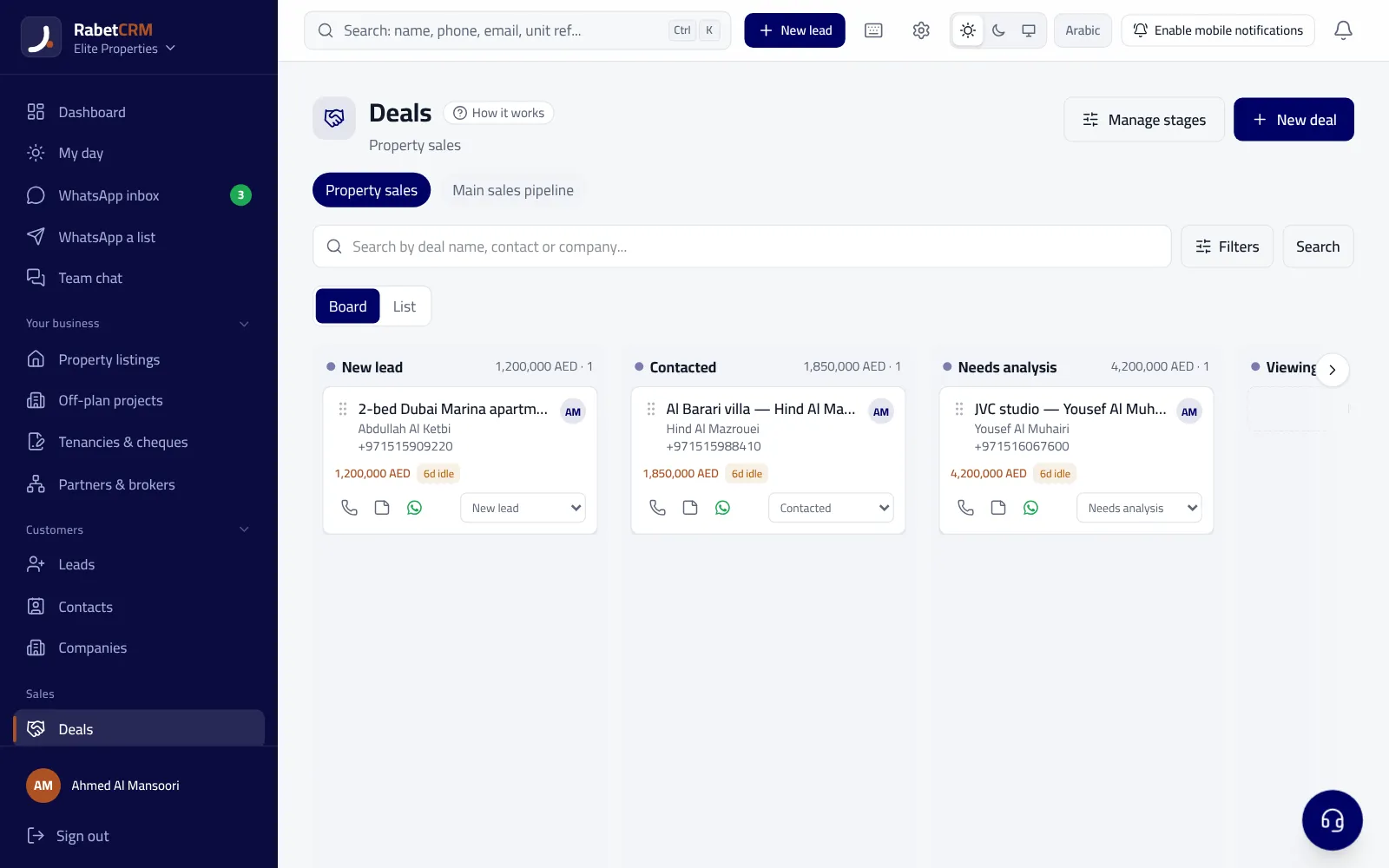
Tenant selection and move-in: a start that shapes the year
Most problems during the year, from bounced cheques to deposit disputes, can be reduced by choosing the tenant carefully and documenting the handover well. Verify the tenant's identity and documents and their ability to meet the agreed payments, and agree acceptance criteria and the acceptable number of cheques with the owner in advance, so letting isn't delayed waiting for approval on every applicant.
At move-in, prepare a detailed condition report with photos of every room and appliance, sign it with the tenant, and hand over keys and access cards against a receipt. Keep the contract, the Ejari certificate and copies of the cheques together in one unit file your team can reach easily.
Rent collection, post-dated cheques and deposits
Rent in Dubai is usually paid by post-dated cheques across the year. A managing agency needs a record for each cheque — number, date, amount and status (pending, deposited, cleared, bounced) — a reminder before it's due, and a note of when funds were remitted to the owner. A cheque whose date passes undeposited, or a bounced cheque the owner hears about late, is one of the fastest ways to lose a landlord's trust.
When a cheque bounces, tell the owner immediately and contact the tenant to resolve it amicably. Since amendments to the federal Commercial Transactions Law, a cheque bounced for insufficient funds is mostly handled as a civil matter, and in many cases the holder can apply to the execution judge to enforce the cheque directly based on the bank's certificate; rental disputes can also go to the Rental Dispute Centre. These are legal procedures that depend on the facts, so consult a lawyer or check with the relevant authority before acting.
The security deposit is usually taken by the landlord at signing to secure the unit's condition, and returned at the end of the lease after deducting proven damage beyond normal wear and tear. Photograph the unit's condition at move-in and move-out; that record is what settles deposit disputes. To show owners their net return after costs, use the rental yield calculator.
Maintenance: who is responsible and how to run it
Under Dubai's tenancy law, the landlord is generally responsible for maintaining the property and repairing defects that affect the tenant's use of it, unless the parties agree otherwise, while the tenant must take reasonable care of the property. Many contracts make the tenant responsible for minor repairs up to a set amount, so read each lease's maintenance clause before deciding who pays. And remember that common areas in jointly owned buildings are usually maintained by the owners' association, funded by the service charges the owner pays.
Good maintenance management means every request has a record: when it came in, what the problem is, which contractor, the cost, whether the owner approved it if above the spending limit, and when it was closed. That record protects the agency when the owner or tenant asks questions, and reveals units with recurring faults. Over time, build a list of trusted contractors with agreed rates for each type of job, so urgent requests get done quickly without negotiating every time.
- Log the request as soon as it arrives, with photos
- Decide who pays based on the lease's maintenance clause
- Get owner approval if the cost exceeds the agreed limit
- Close the request with an after photo and the contractor's invoice
Owner reports and a landlord portal
The periodic report is the product the landlord actually sees. On one page it should answer their questions: is the unit let? How much was collected this month and what's outstanding? Any bounced cheques? What was spent on maintenance and why? When does the lease end and what's the renewal plan? What net amount was remitted after fees? Send it on a fixed schedule, monthly or quarterly, even when nothing new happened.
Better than a report is a landlord portal: a private link where the owner can see their units, contracts, cheques and renewals at any time. It cuts the "any news?" messages, shows the agency's transparency, and is a real competitive edge when winning new landlords — especially investors living abroad.
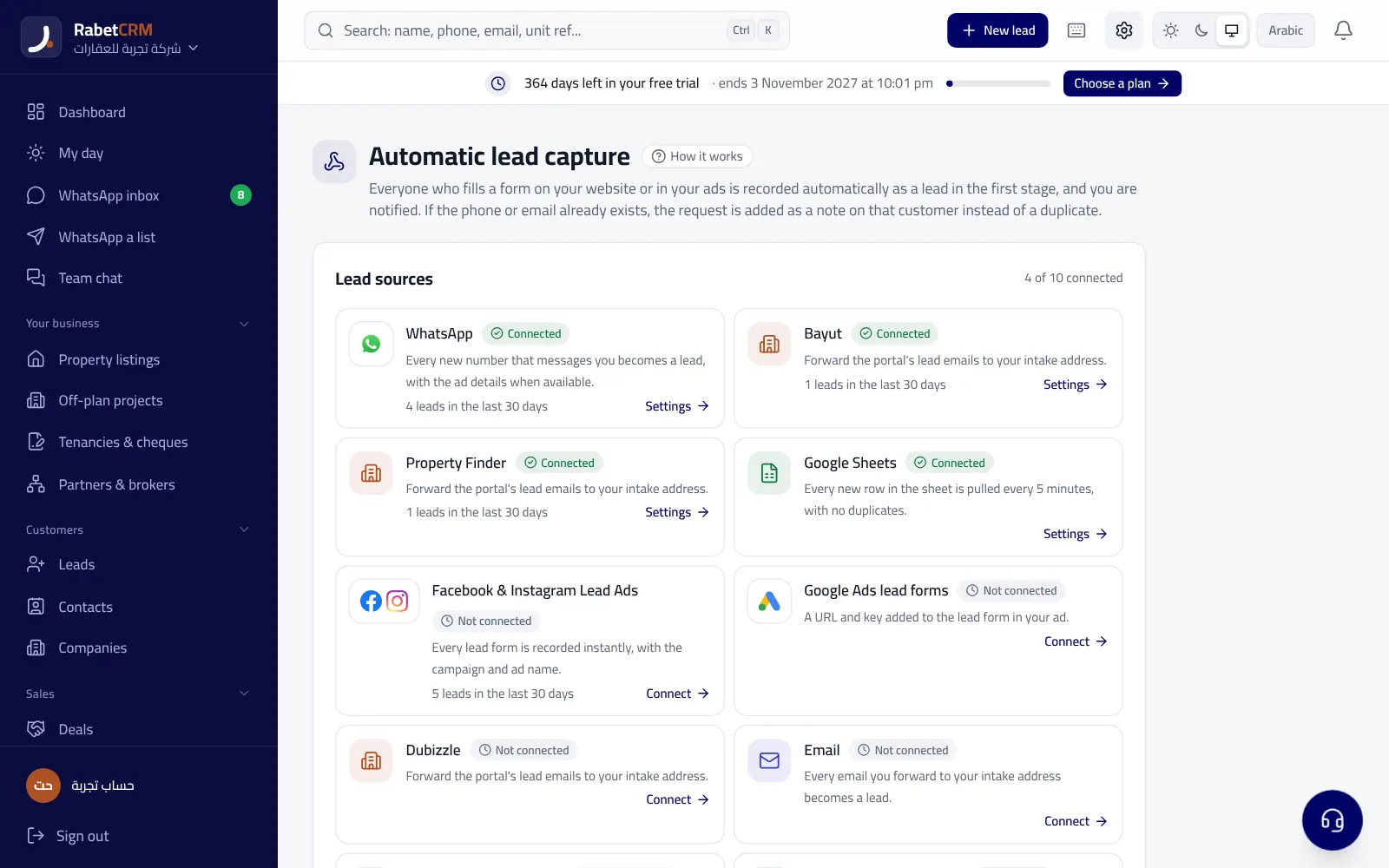
Managing tenancies in RabetCRM
In RabetCRM for real estate you record landlords and tenancy contracts with each contract's Ejari number, the app generates the post-dated cheque schedule automatically from the rent and number of cheques, and you track each cheque's status (pending, deposited, cleared, bounced). You get an alert before each cheque is due and renewal reminders at 90, 60 and 30 days before expiry, and one-click renewal creates a new contract with a fresh cheque schedule. You can send each landlord a private link showing their units, contracts, cheques and renewals without logging in. Maintenance requests can be tracked as tasks assigned to your team with due dates.
Start a 15-day free trial with no credit card, enter three landlords' contracts, then send each their private link and watch how their enquiries change.
More articles
Real estate CRM in every emirate
Compare RabetCRM
FAQ
Do I need a licence to manage other people's property in Dubai?
Yes. Leasing and managing property for others is a real estate activity that needs a licence including that activity and registration with RERA. Confirm current requirements and fees with the Dubai Land Department.
Who is responsible for maintenance of a rented property in Dubai?
Generally the landlord is responsible for maintenance and repairing defects that affect the tenant's use, unless the contract says otherwise; many leases make the tenant cover minor repairs up to a set amount.
How much do property management companies charge in Dubai?
There's no single fixed rate: fees are usually a percentage of annual rent or a fixed amount, sometimes with letting or renewal fees on top. What matters is that they're written clearly in the management contract.
What should the agency do if a rent cheque bounces?
Tell the owner immediately and contact the tenant for an amicable fix. If that fails, there are legal routes such as applying to enforce the cheque or going to the Rental Dispute Centre; legal advice is recommended.
What should a monthly landlord report include?
Occupancy, rent collected and outstanding, any bounced cheques, maintenance costs and reasons, the lease expiry and renewal plan, and the net amount remitted after fees.