Saudi real estate transaction tax: the rate, exemptions and how to calculate it
Saudi Arabia's real estate transaction tax (RETT) is 5% of the property value when it's sold or otherwise disposed of, applied since October 2020 in place of VAT on property supplies. For a citizen buying their first home, the state bears the tax on the first SAR 1 million of the home's value, subject to conditions, and the buyer pays 5% on anything above that. The tax is paid before the title deed transfer. Calculate it with the real estate transaction tax calculator.
Last updated:
What is the real estate transaction tax?
It's a 5% tax on real estate transactions in the Kingdom, such as sales and transfers of ownership, levied on the property value. It was introduced in October 2020, and with it property supplies became exempt from VAT (15%), so RETT replaced it at a lower rate. It's administered by the Zakat, Tax and Customs Authority (ZATCA) and applies to land and residential and commercial buildings.
Which value is it calculated on?
The tax is calculated on the property's value in the transaction, usually the contract value or market value at the time, whichever is higher. So recording a lower price in the contract doesn't reduce the tax if the market value is higher. Confirm the valuation method with ZATCA before the transfer.
First-home support up to SAR 1 million
For a citizen buying their first home, the state bears the real estate transaction tax on the first SAR 1 million of the home's value (the threshold was previously SAR 850,000). If the home is worth SAR 1M or less, an eligible buyer pays no tax; above that, they pay 5% on the excess only.
Eligibility usually requires the buyer to be Saudi and the home to be their first, with other conditions set by the Ministry of Municipalities and Housing, and the buyer obtains a first-home certificate before the transfer. Conditions can change, so check the client's eligibility on the official portals before relying on the support in the price.
Worked examples
| Case | Calculation | Tax due |
|---|---|---|
| SAR 800k apartment, not a first home | 5% × 800,000 | SAR 40,000 |
| SAR 900k first home, eligible citizen | Below SAR 1M | 0 (borne by the state) |
| SAR 1.8M first home, eligible citizen | 5% × (1,800,000 − 1,000,000) | SAR 40,000 |
| SAR 3M commercial land | 5% × 3,000,000 | SAR 150,000 |
When is it paid and by whom?
The tax is paid before the title deed transfer, and the transfer doesn't proceed until it's paid. The tax falls on the transaction itself, and the parties usually agree in the contract who bears it: the seller, the buyer, or half each. So it should be written explicitly in the agreement, so neither side is surprised at the transfer.
Paying it in practice
The usual order before the transfer:
- Agree the price and who bears the tax, and write it in the contract.
- If the buyer is eligible for first-home support, they obtain the first-home certificate from the relevant portal.
- File the tax return on the ZATCA portal and generate the payment number.
- Pay the tax due (after any amount borne by the state).
- Complete the deed transfer once payment is confirmed.
Cases that may not be taxable
The law sets out exempt cases, such as certain distributions of estates to heirs, gifts to some relatives, and some transactions involving government and charitable bodies, plus other cases defined in the regulations. These exceptions have precise conditions, so don't assume a deal is exempt before confirming with ZATCA or a tax adviser.
Conversely, a deal between relatives or at a token price isn't automatically exempt, since market value may be used in the calculation. So the office should ask the client about the nature of the deal from the start and explain what needs official confirmation, rather than discovering a problem on transfer day.
How it differs from VAT
The property sale itself is subject to the 5% RETT, not VAT. Services linked to the deal, such as the broker's commission, are services subject to 15% VAT if the provider is registered. So if a client buys a SAR 1M apartment (not a first home) through a broker at 2.5%, they owe SAR 50,000 RETT on the property, plus a SAR 25,000 commission with SAR 3,750 VAT added if the broker is registered and the buyer is the contracting party. Details in the brokerage commission guide.
Common mistakes
The most common mistake is quoting the client a price without the tax, so they discover the amount at transfer and delay or pull out. Others include assuming every citizen qualifies for first-home support without checking the conditions, or forgetting the support covers only the first SAR 1M, so a buyer thinks a SAR 2M home is fully exempt. The third is not writing in the contract who bears the tax, so seller and buyer disagree at the last step.
The fix is simple: give the client a table of every amount from the start, record their support status and who bears the tax on their file, and review it a few days before the transfer.
What it means for a real estate office
Clients always ask: “How much will I pay in total?” An office that gives a clear number from the start (price, RETT after any support, commission and its VAT) earns trust and avoids surprises at the transfer. Record on every client: whether they're eligible for first-home support, whether they've obtained the certificate, and who bears the tax in the agreement.
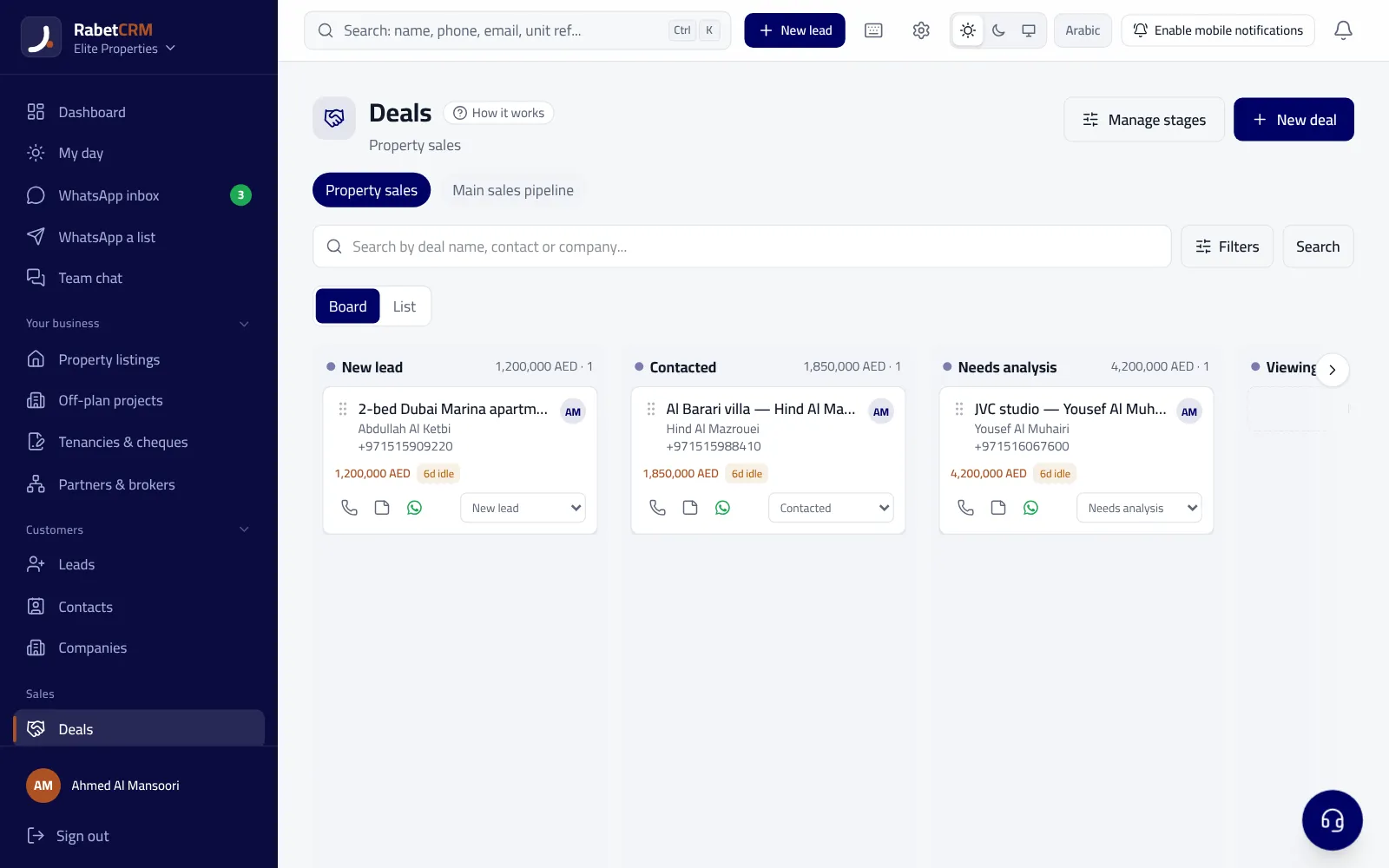
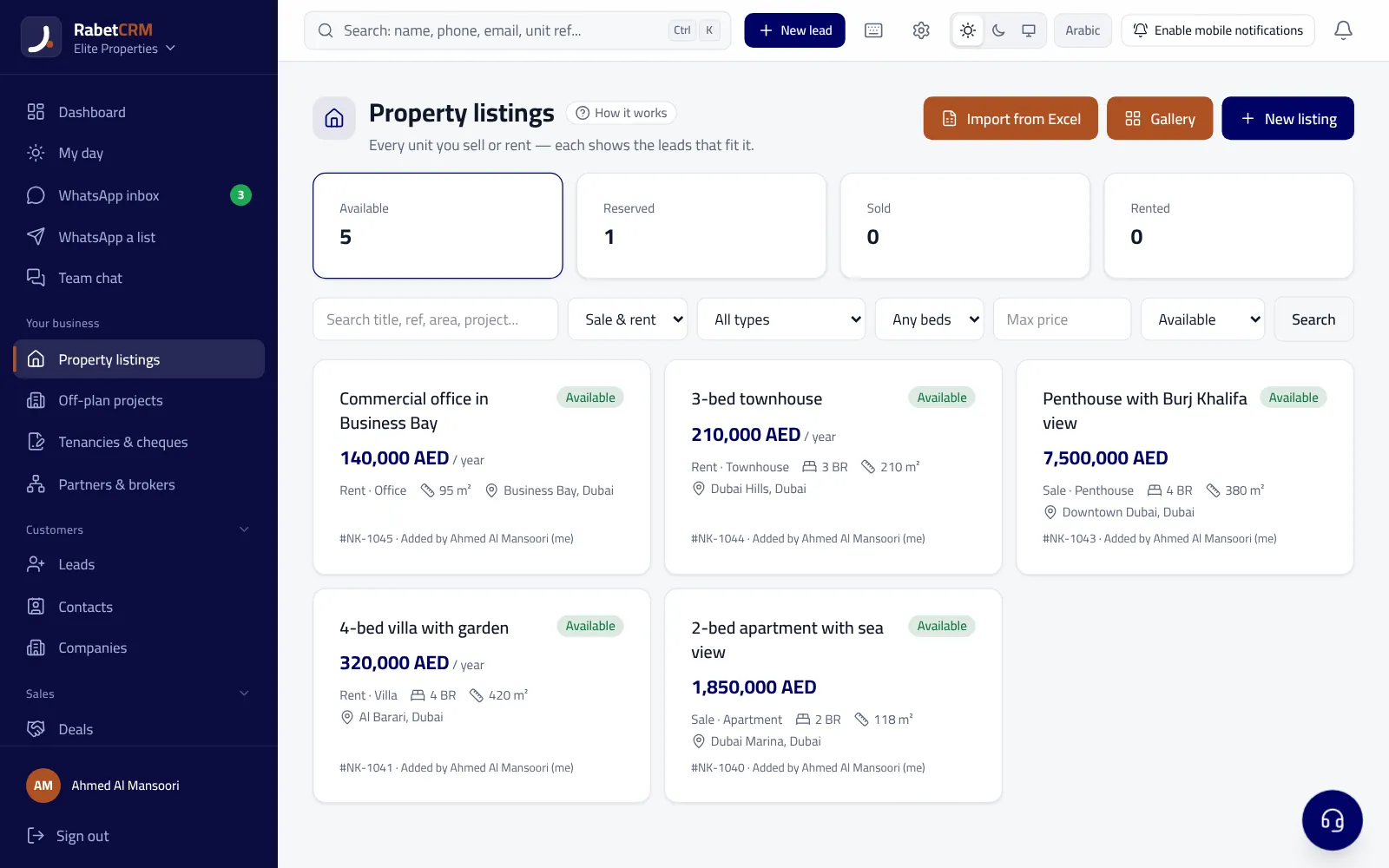
In RabetCRM you can add these as fields on the client record, track each deal through its stages to the transfer, and send the client a quote link setting out the amounts.
More articles
Real estate CRM in Saudi cities
FAQ
How much is the real estate transaction tax?
5% of the property value on the transaction.
Is a first home exempt?
The state bears the tax on the first SAR 1M of an eligible citizen's first home; 5% applies to the excess.
Is VAT added on a property sale?
No, the sale is subject to RETT instead; the broker's commission is subject to VAT.
When is the tax paid?
Before the title deed transfer.
Who bears it — seller or buyer?
As agreed between the parties, and it should be written in the contract.