Real estate brokerage commission in Saudi Arabia: the rate, who pays and the brokerage contract
Saudi Arabia's Real Estate Brokerage Law sets the broker's commission at 2.5% of the deal value for a sale, and of the first year's rent only for a lease, unless the brokerage contract parties agree otherwise in writing; it is paid by the party who contracted the broker. The law requires the brokerage contract to be written and the broker to be licensed by the Real Estate General Authority. Calculate the commission and VAT with the brokerage commission calculator.
Last updated:
The rate set by the law
Article 14 of the Real Estate Brokerage Law sets the brokerage commission at 2.5%. The base differs between sale and lease: for a sale it's calculated on the deal value, for a lease on the first year's rent only, even if the lease runs for several years. The rate isn't an absolute cap or floor; it's what applies when the parties haven't agreed a different rate in writing in the brokerage contract.
| Deal | Calculated on | Example |
|---|---|---|
| Sale | The deal value | A SAR 2M villa: commission SAR 50,000 |
| Lease | First-year rent only | An apartment at SAR 60,000/year: commission SAR 1,500 |
Who pays the commission?
The commission is paid by the party who contracted the broker. If the owner signs a brokerage contract to sell their property, the owner pays; if the buyer engaged the broker to find a property, the buyer pays. A broker can contract with both sides, with each contract stating what each party pays. So the brokerage contract should state who the contracting party is and the commission rate, to avoid disputes at closing.
The brokerage contract
The law requires the brokerage contract to be in writing and documented through the systems the Real Estate General Authority specifies. If the contract doesn't state a term, it runs for 90 days from signing. The law doesn't prevent an owner from contracting several brokers on the same property; exclusivity is an option the parties agree in the contract, not a legal requirement.
The contract usually includes: the parties' and broker's details and licence number, a description of the property, the asking price, the commission rate and who pays it, the term, and whether it's exclusive. Licensing details are in the FAL licence guide.
When several brokers handle the same property
Because an owner can contract several brokers, several offices may market the same unit at once. In that case the commission is usually earned by the broker whose efforts led to the deal under their contract. So it matters that an office can show when it presented the unit to the buyer, when they viewed it and what messages were exchanged — that record is what protects its claim in a dispute.
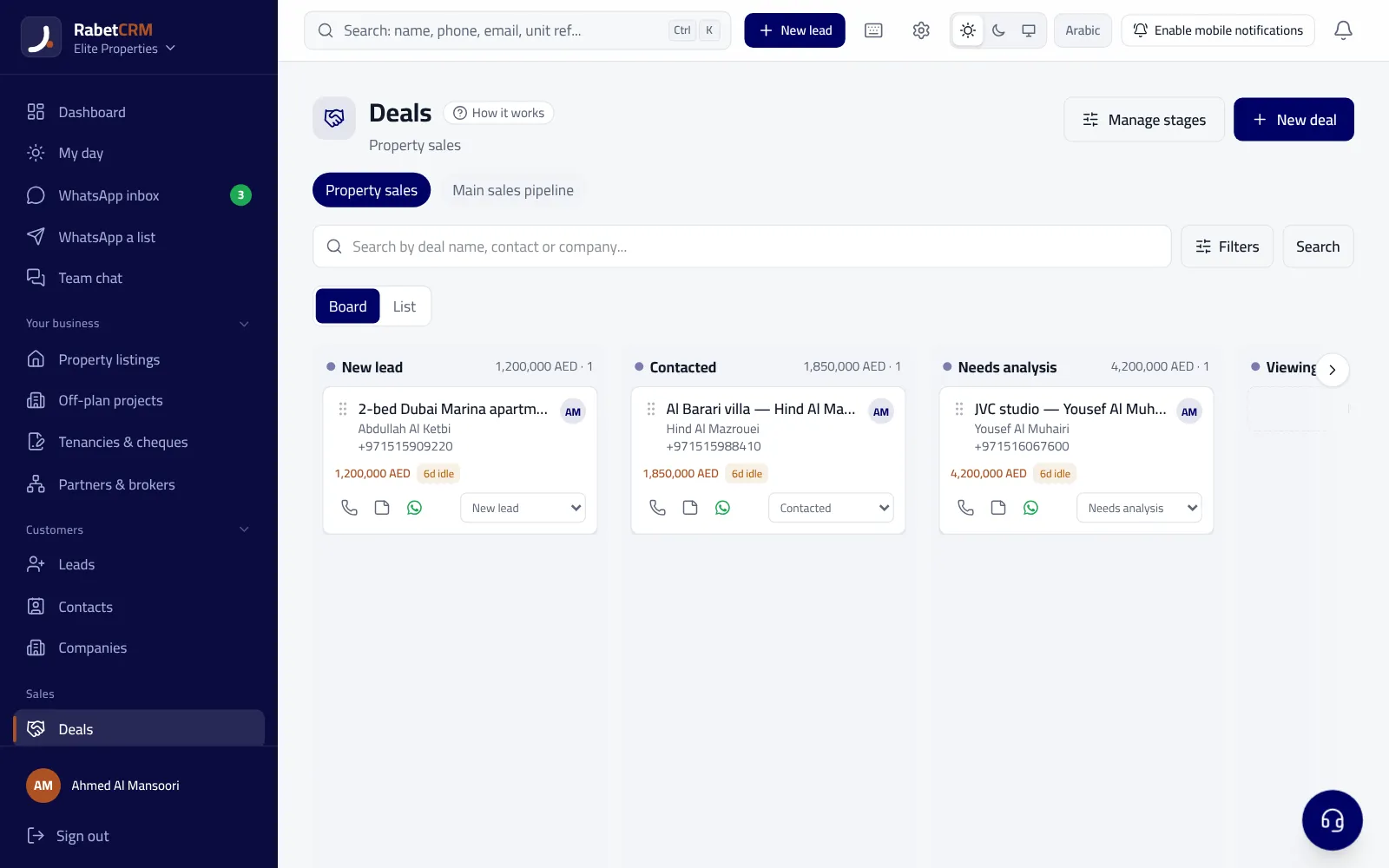
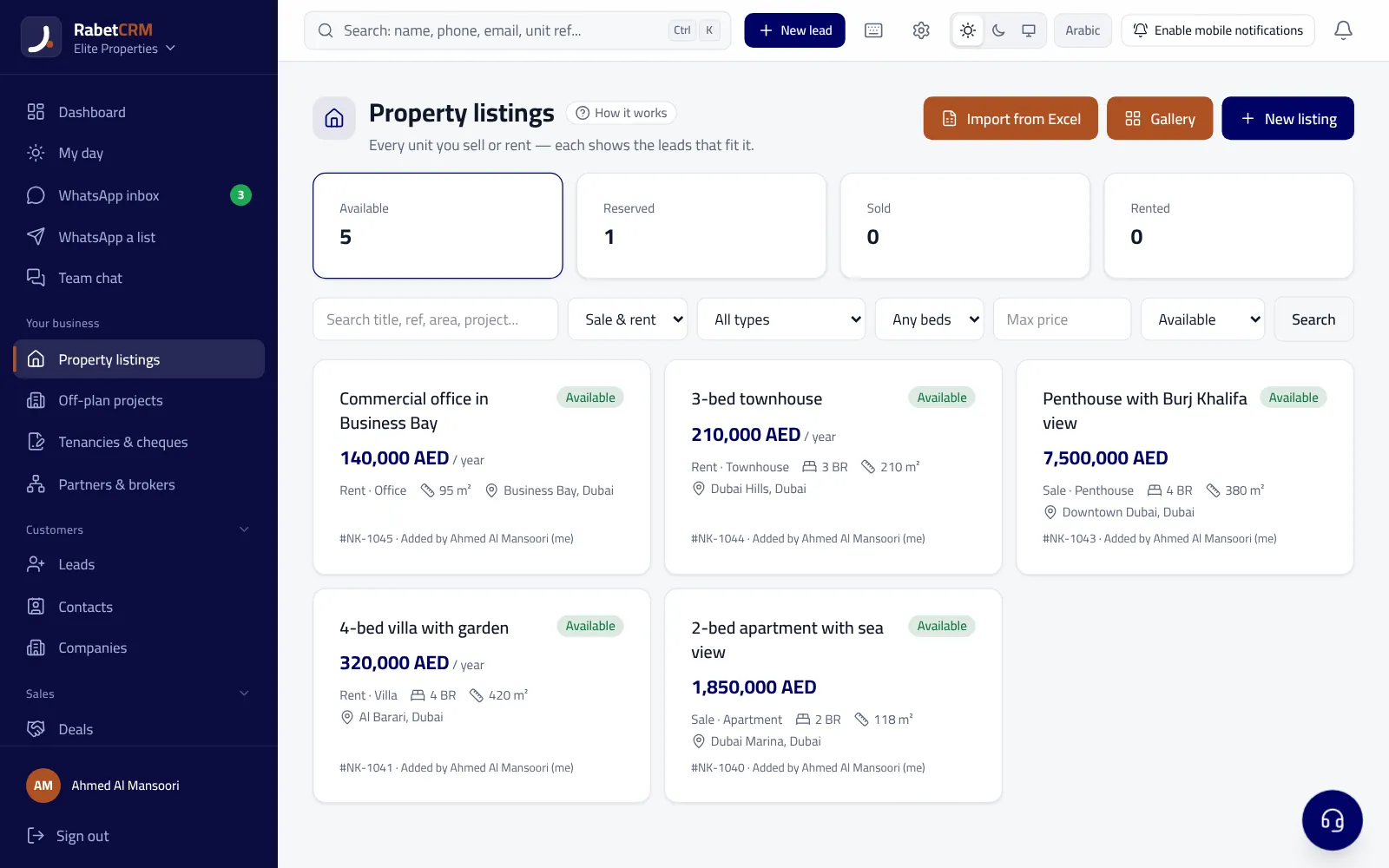
In RabetCRM all of this stays on the client record automatically: the date of first contact, the units sent, viewing dates and outcomes, and WhatsApp chats with the client. If a buyer says they found the unit through another office, you have a clear, dated record.
The deposit
In deals made through a broker, the deposit is agreed between the parties and may not exceed 5% of the value, according to the Real Estate General Authority. The deposit and what happens to it (deducted from the price, when it's refunded) should be written clearly, since it's one of the most common causes of buyer–seller disputes.
VAT on the commission
The commission is payment for a service, so if the broker is VAT-registered, 15% is added to the commission amount — not to the property value. The property sale itself is subject to the 5% real estate transaction tax instead of VAT. Details in the real estate transaction tax guide. Always confirm current rules with ZATCA.
Splitting commission inside the office and with brokers
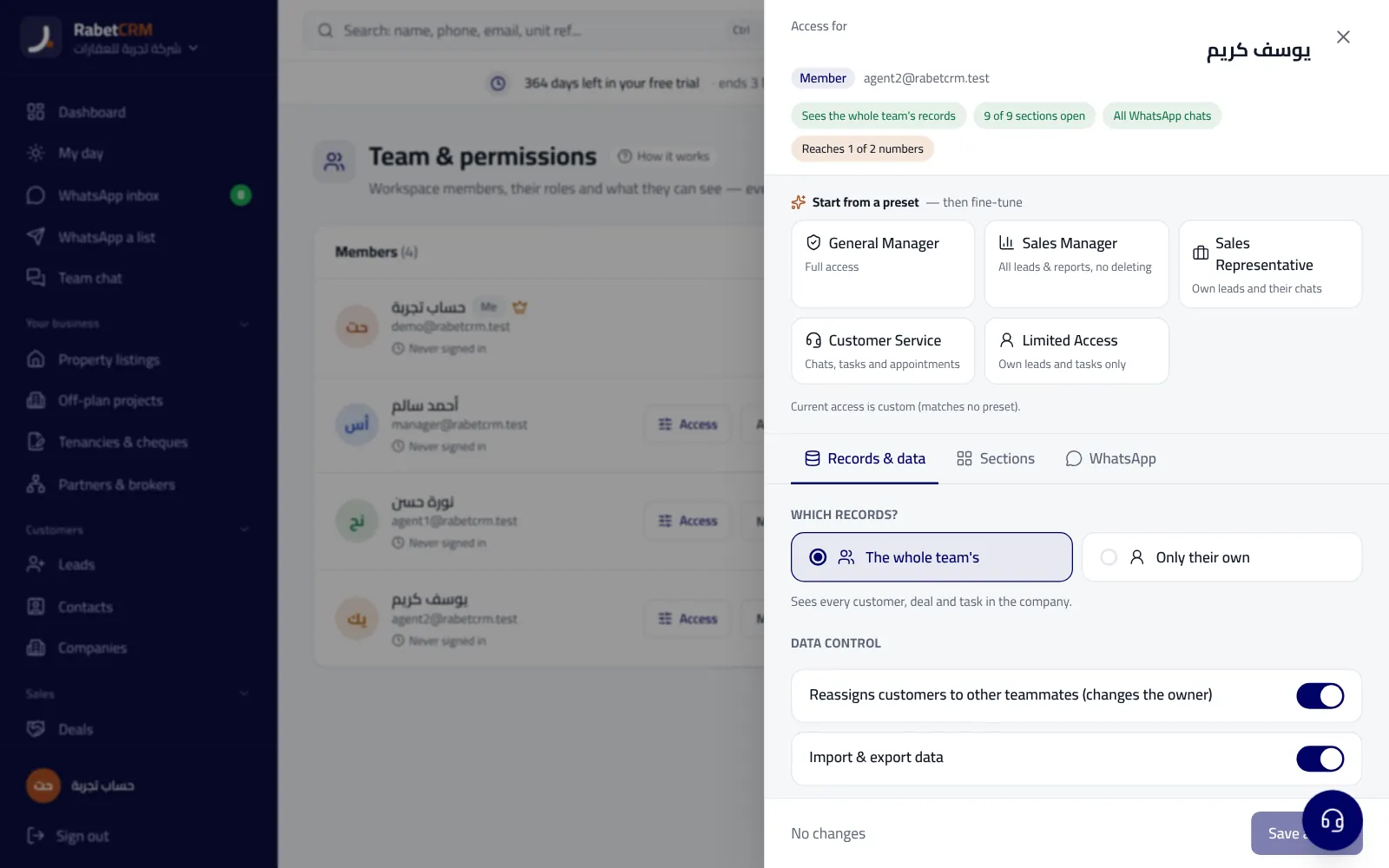
The law sets what the client pays; how the commission is split between the office and the agent, or between two offices that cooperated, is set by your internal agreement. Disputes here usually happen because the agreement was verbal or someone forgot who brought the client. Record on every deal: total commission, each agent's share, any partner's share and collection status.
In RabetCRM every deal records its commission and each agent's share, and the commission report shows what's collected and outstanding per agent, so there are no month-end disputes.
Worked examples
Example 1 (sale): an owner engaged a broker to sell an apartment, which sold for SAR 1.2M with no other rate agreed. Commission at 2.5% = SAR 30,000; if the broker is VAT-registered, SAR 4,500 is added, so the owner pays SAR 34,500.
Example 2 (lease): a tenant engaged a broker to find an apartment and signed a three-year lease at SAR 48,000 a year. The commission is on the first year only: 2.5% × 48,000 = SAR 1,200, plus VAT if applicable.
Practical tips for the office
- Don't start marketing before the brokerage contract is signed and documented.
- Write the rate and who pays explicitly in the contract, even if it's 2.5%.
- Track each brokerage contract's term and renew it before it expires if marketing continues.
- Record the client under the agent who brought them from first contact, so you know who earns the commission.
- Issue the commission invoice at closing and follow up on collection.
- Keep a copy of the brokerage contract on the client and unit records, so you can find it quickly if the commission is questioned.
More articles
Real estate CRM in Saudi cities
FAQ
Is 2.5% a maximum?
It's the rate the law applies unless the parties agree otherwise in writing in the brokerage contract.
Is rental commission on the whole lease term?
No, on the first year's rent only.
Can an owner contract several brokers?
Yes, the law allows it; exclusivity is by agreement in the contract.
How long does a brokerage contract last?
The agreed term, or 90 days from signing if none is stated.
Is VAT added to the commission?
If the broker is VAT-registered, 15% is added to the commission. Confirm with ZATCA.