Broker commission from real estate developers in Egypt: how it's calculated, when it's due, and how to track it to the last pound
A brokerage's commission in Egypt is usually calculated as a percentage of the unit's contract value, with the rate and payout conditions set by the agreement signed with each developer, and it often becomes due after the contract is signed and the buyer pays a set share of the down payment. The company then submits a claim to the developer, follows it to collection, and pays out the salesperson's or partner's share. Recording every stage in a CRM stops commissions slipping and reduces disputes within the team.
Last updated:
How does developer commission work in Egypt?
In Egypt's new-project and compound market, a real estate developer signs with brokerage companies to sell its units and pays them a commission on every unit sold through them. In this kind of sale the buyer usually pays the brokerage nothing; they sign directly with the developer, and the brokerage gets its due from the developer under their agreement.
This differs from resale or rentals, where commission usually comes from the seller, the buyer or both, depending on the agreement. This article focuses on developer commission, because for most companies it's the largest and the hardest to track. For the full picture of running a brokerage, read the guide to real estate CRM in Egypt.
How is the commission calculated?
The usual basis is a percentage of the unit's contract value, meaning the price written in the contract, not just the down payment. But the calculation details are set by the agreement: is it based on the price before or after discount? Does it include the garage, club membership or maintenance deposit? Are there higher tiers for reaching a sales target? So read the agreement with each developer carefully and insist it's written and clear.
Rates vary by developer and project and can change with offers and launch phases; there's no single rate that counts as 'the market rate'. The figures in the table below are a hypothetical example to illustrate the calculation only.
| Item | Hypothetical example |
|---|---|
| Unit contract value | EGP 5,000,000 |
| Commission rate in the agreement (example) | 3% |
| Company's commission from the developer | EGP 150,000 |
| Salesperson's share (example: 20% of company commission) | EGP 30,000 |
| Company net before expenses and taxes | EGP 120,000 |
Splitting commission with sales agents and partners
Every company sets its own scheme for the salesperson's share: a fixed percentage of the company's commission, tiers that rise with monthly sales, or a fixed amount per unit — sometimes with a share for the team leader, or for whoever brought the client if that's not the person who closed. When you co-broke a deal with another brokerage, the agreed part is split between you.
The most common disputes don't come from the rate itself but from vague details: is the salesperson owed their share at signing or when the company collects from the developer? What happens if the buyer cancels? What does someone who left the company before collection get? Write these rules into a clear internal policy the team signs; it protects both sides. To organise roles within the team, see organising a real estate sales team in Egypt.
- Define when the salesperson's share is due: at signing or on collection
- Define what happens if the contract is cancelled or the developer claws back commission
- Define shares for whoever brought the client and whoever closed, if different
- Define a departing salesperson's rights on deals not yet collected
When is commission due and when do you claim it?
Signing alone often doesn't make commission due. Many agreements require the buyer to pay a set share of the down payment or a number of early installments, or require specific documents such as a copy of the contract and the company's invoice, before the developer accepts the claim. After the claim is submitted, payment can take weeks or months depending on each developer's payment cycle.
The problem is that these conditions differ between developers, so it's hard for the accountant or manager to remember which deal has met its conditions and which is still waiting. The result is commissions claimed late for no reason, or claims sent that nobody followed up. This is where tracking installments in the system pays off: when the down payment and installments are recorded in RabetCRM against the payment plan, you know when the buyer has paid the required share. For details, read tracking down payments and quarterly installments.
How to track commission in a CRM from contract to collection
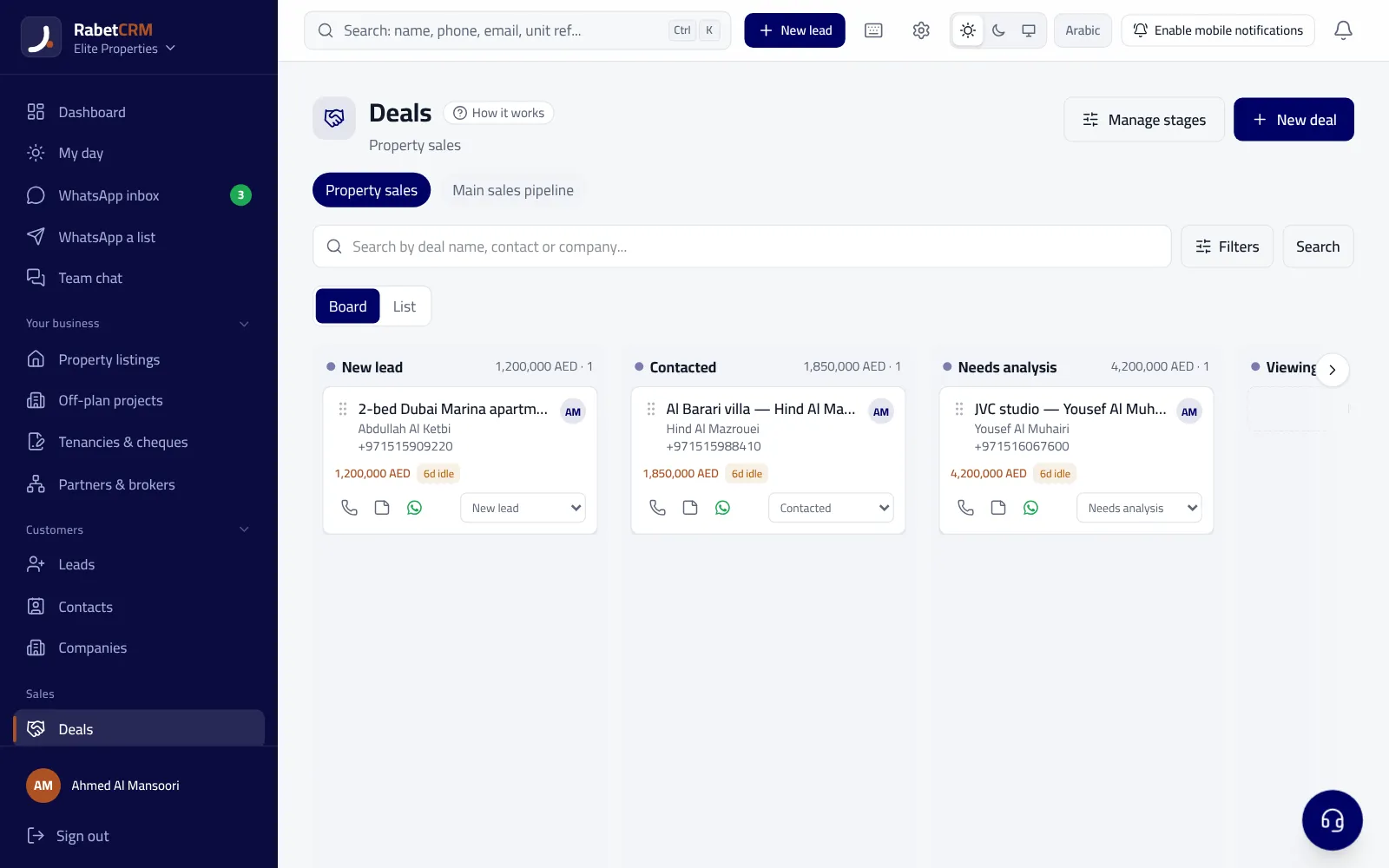
The idea is simple: every closed deal in the system carries the developer, project, contract value and commission rate, and moves through clear stages until the commission is collected and the salesperson is paid. In RabetCRM you track the developer commission on every deal, record the salesperson's or partner agency's share, and the commissions report shows what's been collected and what's still owed.
You can also add tasks and reminders on the deal itself, such as 'send claim to developer' or 'follow up payment in two weeks', so follow-up doesn't depend on one person's memory. With team permissions, each salesperson sees their own deals and commission, while the manager and accountant see the full picture.
| Stage | What to record | Suggested reminder |
|---|---|---|
| Contract signed | Developer, project, unit, contract value, commission rate, salesperson | Review entitlement conditions in the agreement |
| Conditions met | Date the required share was paid and documents submitted | Reminder at the qualifying installment date |
| Claim submitted | Claim date, reference and amount | Follow up with the developer after an agreed period |
| Collected | Amount collected, date and any difference from expected | Pay the salesperson's share per policy |
| Paid to salesperson | Amount paid and date | None — the deal is closed out |
Common mistakes that lose commission
Most lost commissions aren't lost because the developer refused, but because of simple internal mistakes that multiply as deals and developers grow. Here are the main ones:
- Not registering the client under your company with the developer before the visit or contract, as its terms require
- Relying on an Excel file only one person updates
- Not following up on a claim after sending it
- No written sales-share policy, so claims stall over disputes
- Not linking the deal to the buyer's payment status, so you don't know when conditions are met
How to get started
Gather your current developer agreements, record each developer's commission rate and entitlement conditions, then enter your open deals into RabetCRM at their current status: conditions met? Claim sent? Collected? You'll often find commissions that need immediate follow-up. After that, make recording every new deal with this data a fixed rule.
RabetCRM runs in Arabic and English and in Egyptian pounds, and brings leads from Facebook and your website, WhatsApp chats, deals, installments and commissions into one place. Learn more on the Egypt page, compare options in the guide to the best CRM in Egypt, and start a 15-day free trial.
More articles
Real estate CRM across Egypt
FAQ
What commission rate do brokers get from developers in Egypt?
There's no standard rate; it varies by developer and project, is set by the written agreement between the company and the developer, and can change with offers and launch phases.
Is commission based on the down payment or the full unit value?
The usual basis is the unit's contract value, but details such as discounts, garage or maintenance deposit are set by the agreement with each developer.
When do I claim commission from the developer?
Once the conditions in the agreement are met, which often include the signed contract, the buyer paying a set share of the down payment and submitting the required documents.
When does the salesperson get their share?
It depends on your internal policy. Many companies pay the salesperson's share after collecting their own commission from the developer; what matters is that the rule is written and known to everyone.
Does RabetCRM track commission per deal?
Yes. You track the developer commission on every deal until it's collected, with the salesperson's or partner's share and a report of what's collected and owed.